


 LATEST NEWS:
English
29.04.2026
 09:27:00
JASENOVAC - AUSCHWITZ OF THE BALKANS
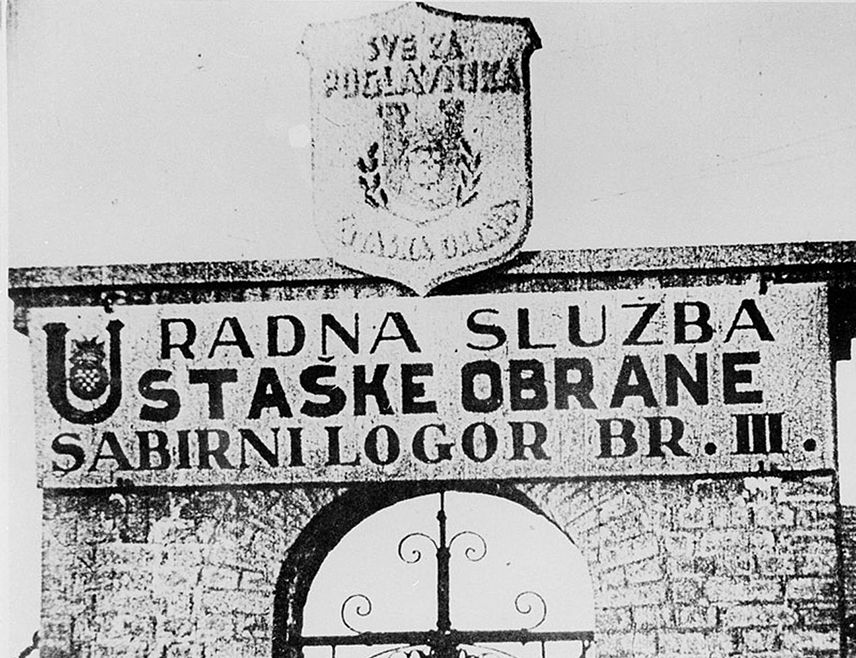
BIJELJINA, APRIL 29 /SRNA/ - On April 30, 1945, members of the 45th Division of the Yugoslav Army liberated the Jasenovac concentration camp, where Croat Ustasha had liquidated, according to the post-war Yugoslav commission, around 700,000 mostly Serbs, as well as Jews, Roma, and opponents of the Ustasha regime.
During their retreat, the Ustasha massacred the prisoners, who on April 22, 1945, made a desperate charge at the guards to escape to freedom, but only 169 out of 1,073 succeeded in doing so. In this largest "death factory" in the Balkans during World War II, the Ustasha, who were the regular army of the Independent State of Croatia /NDH/, killed hundreds of thousands, mostly Serbs, Jews, and Roma. The Jasenovac concentration camp was the largest death camp in the NDH at the time. It was formed in August 1941, and was designed by one of the greatest war criminals of the time, Vjekoslav Maks Luburić, who was also the first commander of the camp. The camp was destroyed by the Ustasha in April 1945 to cover up their crimes. The "labor camp Jasenovac," as it is referred to by the Croatian state administration, was a place of execution for Serbs, Roma, and Jews of all ages, genders, life stages, social, educational, and other backgrounds, as well as anyone who was an opponent of the regime. The Jasenovac camp system was infamous for its barbaric methods and the large number of victims. Professor Gideon Greif, a historian specializing in the Holocaust, and author of the significant monograph "Jasenovac - The Auschwitz of the Balkans - Ustasha Empire of Cruelty", states that Jasenovac was far more brutal than Auschwitz. In the process of "purifying the Croat nation," Serb children were killed alongside the adults. Between April 1941 and May 1945, 73,316 children were killed and tortured in various ways in the Ustasha-controlled NDH. During World War II, Croatia was the only place in all of Europe with special camps for children. From December 1941 to April 1942, the Ustasha killed 19,544 Serb boys and girls, whose identities were established later. They were being killed in the most horrific ways, according to testimonies, and were dying more than adults, from disease, starvation, thirst, and freezing. Many children were slaughtered at Jasenovac in mid-September 1942. The children were transported to a brick factory in 15 cartloads and burned. A similar fate befell 300 children who were executed in Gradina in October 1942. An enormous number of children, around 12,000, were saved from the Ustasha pogrom, and the person most responsible for this action was Diana Budisavljević, along with dozens of noble people who helped her. The exact number of victims at the Jasenovac concentration camp has never been precisely determined. The camp’s archives were destroyed twice – in early 1943 and in April 1945. The Croatian national commission, established in 1945, reported to the International Military Tribunal in Nuremberg that the number of victims was between 500,000 and 700,000. German generals from World War II provided varying numbers regarding the number of Serbs killed in the NDH, but they all mentioned hundreds of thousands of victims. Aleksander Ler spoke in 1943 about 400,000 Serbs killed, while Lotar Renduli, a German general, mentioned around "500,000 Orthodox Christians." General Hermann Neubacher referred to "more than 750,000 killed," and Ernst Fik cited 600,000. After World War II, in an attempt to equalize the victims and the merits for the liberation of the country, the communist authorities did everything they could to minimize mentions of Jasenovac. No films or series were made about the largest killing site in the NDH, while the communist leader Josip Broz Tito never visited Jasenovac.
English
3 hours ago

CVIJANOVIĆ AND TURNER DISCUSS CURRENT POLITICAL SITUATION IN BiH
WASHINGTON, MAY 14 /SRNA – The Serb member of the BiH Presidency Željka Cvijanović met today in Washington with Republican member of the US House of R...
4 hours ago
VIPOTNIK: WE HAVE PROVEN CROATIAN VIOLATIONS OVER TRGOVSKA GORA
BANJA LUKA, MAY 14 /SRNA/ – Republika Srpska Minister for Spatial Planning, Construction and Ecology Bojan Vipotnik told SRNA that the BiH delegation...
5 hours ago
REFUSAL TO RELEASE MLADIĆ FOR TREATMENT IS ACT OF DISGRACE AND INHUMANITY, DEFENSE WILL NOT GIVE UP REQUEST
BELGRADE, MAY 14 /SRNA/ – Lawyer Branko Lukić told SRNA that the decision of the Hague Mechanism to refuse to allow General Ratko Mladić to receive tr...
5 hours ago
ALL LEGAL, MEDICAL GROUNDS EXISTED FOR DIFFERENT HAGUE DECISION
ISTOČNO SARAJEVO, MAY 14 /SRNA/ – Lawyer Ognjen Tadić told SRNA that the decision of the Hague Mechanism not to allow General Ratko Mladić to receive...
7 hours ago

QUESTIONS OF INTERNATIONAL OBLIGATIONS, INCONSISTENCIES RAISED IN GENEVA
NOVI GRAD, MAY 14 /SRNA/ – The confrontation between BiH and Croatia in Geneva today raised questions regarding violations of international obligation...
7 hours ago
DODIK: BRUTAL CRIME IN TUZLA IS NOT ONLY HISTORICAL FACT, BUT WOUND THAT BURNS
BANJA LUKA, MAY 14 /SRNA/ – President Milorad Dodik stressed that the crime against JNA members in Tuzla, who were peacefully withdrawing from the cit...