


 LATEST NEWS:
English
16.05.2026
 12:34:00
DUKE RADOMIR PUTNIK - THE FOUNDER OF MODERN SERBIAN ARMY
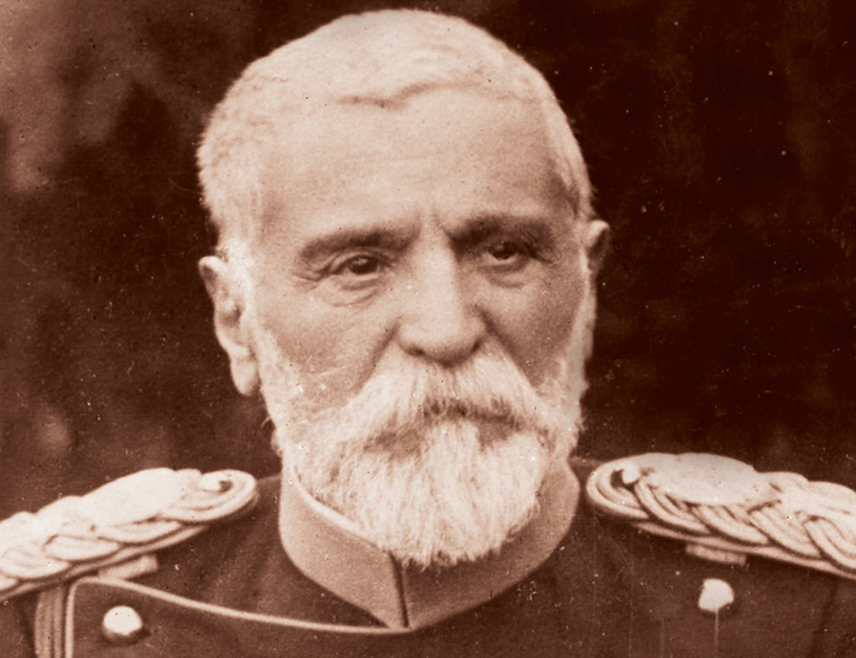
BIJELJINA, MAY 16 /SRNA/ - One of the greatest Serbian military commanders and the creator of the modern Serbian army, Duke Radomir Putnik, who proved himself as an excellent strategist in the Balkan Wars and the Great War, died on May 17, 1917.
Radomir Putnik was a soldier and commander for 40 years and received his military education at the Artillery School in Belgrade. Putnik served twice as Chief of the General Staff, five times as Minister of War, and was Chief of Staff of the Supreme Command of the Royal Serbian Army during the Balkan Wars and the Great War. As the creator of the modern Serbian army, Putnik introduced various innovations in officer training and education, including tactical problem-solving. Together with Živojin Mišić, Putnik prepared all the war plans for the Balkan Wars and the Great War. PARTICIPANT IN ALL WARS FROM 1876 TO 1916 Putnik participated in all Serbian wars from 1876 to 1916. In the two Serbian-Turkish wars between 1876 and 1878, he commanded the Rudnik Brigade and the Veternik Detachment, units that distinguished themselves in battles at Javor, Veliki Šiljegovac, Đunis, Pirot surroundings, and in the liberation of Niš, Vranje, and Gnjilane. In the Serbian-Bulgarian War in 1885, Putnik was Chief of Staff of the Danube Division, and in 1890, he was appointed Deputy Chief of the General Staff. He introduced tactical problem-solving into the training of officers at the Higher School of the Military Academy, where he taught tactics and general staff service. He was given command of the Šumadija Divisional District in 1893, but it was taken from him in 1895. He was retired in 1896 under suspicion of collaborating with the Radical Party. He was reactivated after the assassination of King Aleksandar Obrenović in 1903, and from then on, as Chief of the General Staff and Minister of War in 1904, 1906–1908, and 1912, he led war preparations. Thanks to Putnik, the Serbian army was equipped with rapid-fire weapons and heavy artillery, its doctrine was solidified, the reserve officer corps was expanded and trained, officer schools for different branches were established, several generations of general staff officers were trained, war plans were developed, and mobilization procedures were defined. The famous Serbian commander significantly contributed to the victory of the Serbian armies in the First Balkan War as Chief of Staff of the Supreme Command, especially in the unexpected clash with the Turkish army at the Battle of Kumanovo, and later in the Battle of Bitola in October and November of 1912. After the Battle of Kumanovo, Putnik was promoted to the rank of the first Duke /field marshal/ of the Serbian army. In the Second Balkan War in 1913, Duke Putnik timely deployed and prepared the army, having foreseen the Bulgarian attack, which was crucial for the triumph in the Battle of Bregalnica. GREAT TACTICIAN During the Great War, Duke Putnik served as Chief of Staff of the Supreme Command until his health deteriorated in 1916, at which point he was succeeded by General Petar Bojović. Radomir Putnik commanded the Serbian army during all four enemy offensives against Serbia. In 1914, during the Great War, through skillful maneuvering and concentration of the main Serbian forces, he contributed to the defeat of the superior Austro-Hungarian troops in the battles of Cer and Kolubara. His decision to abandon Belgrade and shorten the front during the Battle of Kolubara proved to be crucial, as it gave the Serbian army time to recuperate and rest. With the revitalized Serbian army, Duke Putnik launched an offensive that dealt a decisive blow to the Austro-Hungarians at Suvobor, after which their forces were driven out of Serbian territory. By the time the fourth offensive against Serbia began, Putnik was already gravely ill and had little involvement in operational decisions. Nevertheless, under extremely unfavorable conditions for Serbia, he managed to organize the retreat of the Serbian army across the mountains of Albania and Montenegro to the Albanian coast. During this retreat, Duke Putnik, through a series of maneuvers, thwarted the German High Command's intent to encircle and destroy the Serbian army in coordination with Bulgarian and Austro-Hungarian troops. Previously, the Allies, having misjudged the situation, had prevented him from launching an offensive that could have stopped Bulgaria from entering the war on the side of the Central Powers. BURIED AT THE RUSSIAN CEMETERY Gravely ill, Putnik arrived in Skadar on December 6, 1915, and on January 9, 1916, he was transferred to Corfu, where he underwent treatment until September of the same year. From Corfu, he went to Nice to continue his medical care. The soldiers carried the ailing first Serbian duke in their arms across Albania. Putnik requested a five-month medical leave, which was granted by King Peter I Karađorđević. Radomir Putnik died on May 17, 1917, in Nice, where his coffin was left in a church at the Russian Cemetery. One Serbian journalist, passing by seven years later, wrote in shock: “The great leader of our army still lies in a church window, while the homeland still cannot remember its great son to whom it owes so much.” Two French generals commented on the above: "Either take him back to your country and bury him, or let us French do it." In November 1926, more than nine years after his death, the remains of Duke Putnik arrived at the Belgrade railway station. The famous Serbian commander was buried at the New Cemetery in Belgrade with full state and military honors. A large memorial was erected at his grave, funded by numerous admirers. A MOUNTAIN IN CANADA NAMED AFTER A SERBIAN GENERAL Shortly after the end of the Great War, in honor of the Chief of the Supreme Command of the Serbian Army and the first Serbian duke, Radomir Putnik, the Canadians named one of their mountains Mount Putnik. Although he died before the creation of Yugoslavia, Putnik’s fame, the victories of the Serbian army, and his decisive role in uniting the South Slavs kept his name alive throughout the 20th century. He and Duke Stepa Stepanović held special places as commanders of the Serbian army that liberated the South Slavs and made the creation of Yugoslavia possible. One of the longest streets in Sarajevo, as well as many streets in other cities across the former Yugoslavia, bore the name of Duke Putnik for decades, as a sign of gratitude for the victory over the Austro-Hungarian occupiers.
English
1 hour from now
“GOLDEN HANDS OF THE DRINA REGION” BRINGS TOGETHER GUARDIANS OF TRADITION
VIŠEGRAD, JUNE 20 /SRNA/ – The traditional tourism and business event “Golden Hands of the Drina Region” is being held today on the Mehmed Paša Sokolo...
29 minutes from now
NUŽDIĆ: OPERATION CORRIDOR - QUESTION OF SURVIVAL FOR THE SERB PEOPLE WEST OF THE DRINA
BANJA LUKA, JUNE 20 /SRNA/ – Acting Director of the Republika Srpska Research Centre of War, War Crimes and Tracing Missing Persons Viktor Nuždić stat...
3 minutes ago
ĐOKIĆ: PLAN TO BUILD NEW BILEĆA HYDROPOWER PLANT
BILEĆA, JUNE 20 /SRNA/ – Minister of Energy and Mining of Republika Srpska Petar Đokić has announced today in Bileća that the construction of a new Bi...
32 minutes ago

AMERICA CHANGING ITS APPROACH OF THE BALKANS
BANJA LUKA, JUNE 20 /SRNA/ – The United States is changing its approach to the Balkans compared with the leading countries of the EU, while the curren...
45 minutes ago
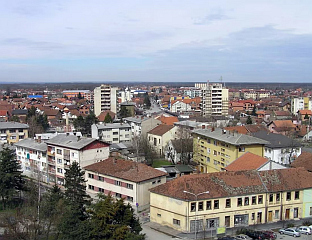
ACQUITTAL OF ČALUŠIĆ WHITEWASHES HVO MEMBERS OF CRIMES AGAINST SERBS
ODŽAK, JUNE 20 /SRNA/ – By acquitting Jure Čalušić of crimes committed against the Serb population in the municipality of Odžak, the humiliating and p...
1 hour ago
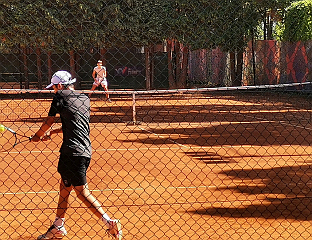
QUALIFYING MATCHES FOR ITF J30 TOURNAMENT UNDERWAY
DOBOJ, JUNE 20 /SRNA/ – Qualifying matches for the ITF J30 junior tournament for players under 18 begin today in Doboj, with around 170 competitors fr...