


 LATEST NEWS:
English
31.05.2026
 12:15:00
PERMISSION FOR HILANDAR
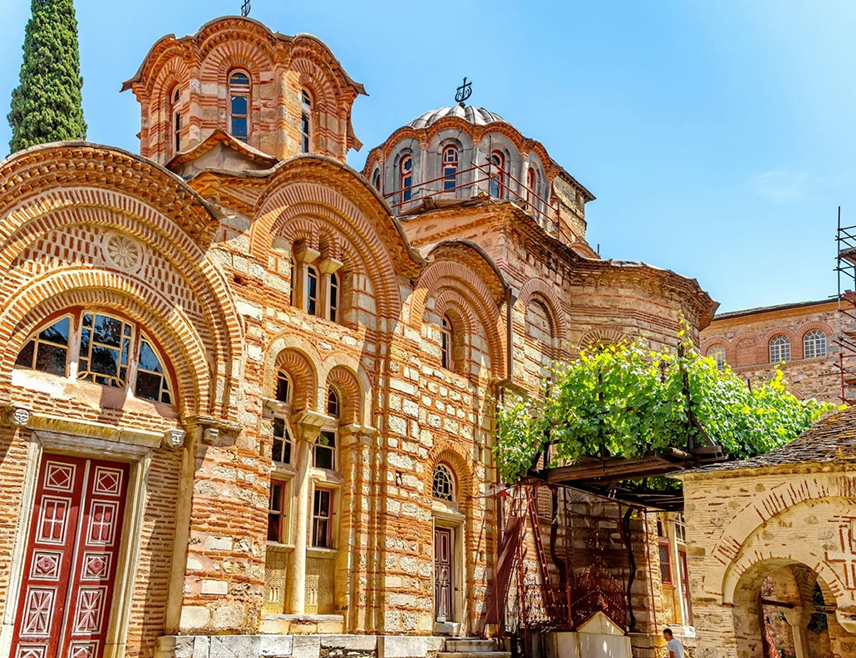
BIJELJINA, MAY 31 /SRNA/ - On June 1, 1198, the Roman /Byzantine/ Emperor Alexios III Angelos granted permission to the Serbian Grand Župan Stefan Nemanja and his son, the monk Sava, to "build a new monastery of Mount Athos upon the ruins of Hilandarion."
The Serbian monastery of Hilandar, which the father and son founded on the site of the ruins of a Greek monastery, became a treasury of exceptional cultural, historical, and artistic wealth, one of the four largest and most beautiful on Mount Athos, and for centuries it has been the center and nursery of Serbian spirituality. In the hierarchy of Mount Athos, Hilandar is in fourth place by significance. Viewed from the outside, the monastery has the appearance of a medieval fortress, given that it is fortified with ramparts up to 30 meters high. The outer walls are 140 meters long on average and enclose an area that is about 75 meters wide. The monastery is fortified in this way because in the past, like other fortified monastic settlements on Mount Athos, it had to defend itself against pirates. Some consider Hilandar to be one of the first universities in a "precursor" form—specifically, the first Serbian university. The Hilandar monastery was built by the Greek Athonite monk George Chelandarios. Stefan Nemanja passed away in the monastery in 1199. King Stefan Uroš I significantly fortified the monastery in 1262. Hilandar was especially aided by King Milutin, who around 1320 built the new Church of the Entry of the Most Holy Theotokos into the Temple on the site of the old one. During the time of King and Emperor Dušan, Mount Athos came under his rule, and this was the period of the monastery's greatest prosperity. During the centuries of Turkish rule, Hilandar was helped by Russian tsars and Moldavian princes in the 16th century, and by Serbian patriarchs from Peć in the 17th century. At the beginning of the 19th century, the first modern Serbian state was created, and the rich tradition of Hilandar-Serbian relations continued. In recent history, the monastery suffered significantly in a catastrophic fire in 2004, which was followed by the reconstruction of the damaged buildings. Hilandar represents one of the most significant centers of Serbian culture and spirituality.
English
8 hours ago
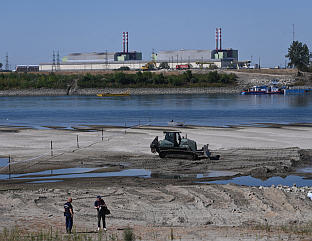
PAKS NUCLEAR POWER PLANT BACK AT FULL CAPACITY
BUDAPEST, AUGUST 26 /SRNA/ - Hungary’s Paks Nuclear Power Plant is back at full capacity after earlier reducing electricity production due to falling...
9 hours ago

FOURTH WIN FOR SERBIAN WOMEN’S VOLLEYBALL TEAM AT EUROPEAN CHAMPIONSHIP
BELGRADE, AUGUST 26 /SRNA/ - Serbia’s women’s volleyball team defeated Greece 3-0 in sets /25-22, 25-13, 25-18/ to claim their fourth victory at the E...
9 hours ago
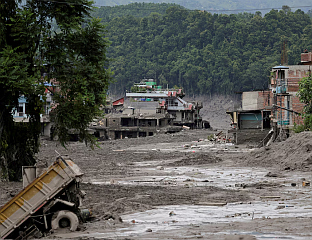
DEATH TOLL FROM FLOODS RISES TO 157
KATHMANDU, AUGUST 26 /SRNA/ - The death toll from a devastating flash flood that swept through villages in northern Nepal has risen to 157, according...
10 hours ago
PRESSURE ON SERBS IN JOINT INSTITUTIONS, SRPSKA READY TO HELP THEM
BANJA LUKA, AUGUST 26 /SRNA/ - President Milorad Dodik said, after several groups of Serbs employed in the joint institutions in Sarajevo complained t...
10 hours ago

MINIĆ OPENS NINTH DOMESTIC PRODUCTS FESTIVAL IN BANJA LUKA
BANJA LUKA, AUGUST 26 /SRNA/ - Republika Srpska Prime Minister Savo Minić opened the Festival of Domestic Products and Services in Banja Luka this eve...
10 hours ago

MAČKOVIĆ AND PIMENOV REACH WORLD CHAMPIONSHIP FINAL
BELGRADE, AUGUST 26 /SRNA/ - Serbian rowers Martin Mačković and Nikolai Pimenov have reached the final of the World Rowing Championships in Amsterdam.