


 LATEST NEWS:
English
06.06.2026
 09:25:00
TICKS TRANSMIT NUMEROUS DISEASES; REMOVE THEM CAREFULLY
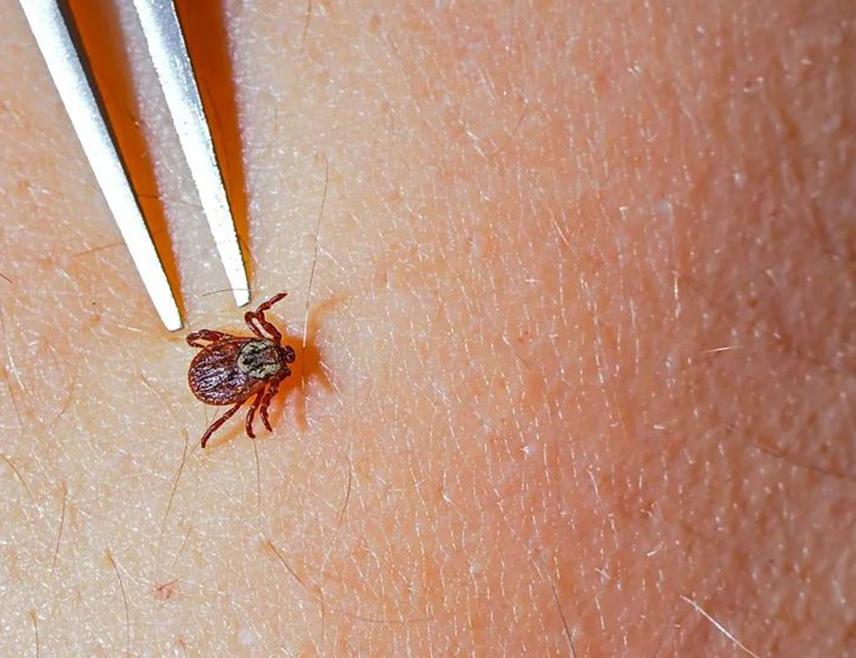
BANJA LUKA, JUNE 6 /SRNA/ – Ticks can transmit several diseases to humans, most of them zoonotic diseases that primarily affect animals, so they should be removed carefully, without pulling, twisting, or applying substances to the bite site, Nina Rodić Vukmir, Head of the Epidemiology Department at the Republika Srpska Public Health Institute, told SRNA.
Ticks are most commonly found in tall grass, shrubs, forests, parks, and unmanaged green areas. They are carriers of numerous diseases, including Lyme disease, Tick-borne encephalitis, Tularemia, Crimean-Congo hemorrhagic fever, rickettsiosis, and ehrlichiosis. Vukmir noted that vaccination can prevent tick-borne encephalitis but not Lyme disease, which is the most common tick-borne illness in this region. "If a tick bite occurs, the tick should be removed from the skin without pulling or crushing it. Before removing the tick, no substances such as alcohol, gasoline, oils, or similar products should be applied, as this causes the tick to contract and release larger amounts of secretions," Vukmir explained. She stated that ticks become infected by feeding on the blood of infected animals or through transovarial transmission from the mother tick to her offspring. "People become infected after being bitten by an infected tick, which transmits pathogens through its saliva. Infection can also occur by crushing a tick and exposing damaged skin or mucous membranes to its contents," Nina Rodić Vukmir added. According to her, a tick should be removed using tweezers by grasping it as close to the skin as possible and pulling it out gently. The bite site should then be disinfected. "The bite site should be monitored for up to one month. The appearance of redness may indicate infection with the bacterium that causes Lyme disease and requires medical treatment," Vukmir emphasized. She advised the public to avoid areas where encounters with infected ticks are possible, particularly by avoiding walking through tall grass and low vegetation. She also recommended the use of tick repellents on the body and clothing, especially on exposed skin, as well as appropriate clothing such as long sleeves and long trousers, wearing clothes close to the body, tucking trouser legs into socks, and wearing caps or hats. In addition, people should inspect their clothing and entire body, especially children, after returning from nature. She stressed that ticks can also be brought home on clothing and personal belongings such as bags.
English
1 hour from now

SEARCH CONTINUES FOR 82 MISSING SERBS, CALL FOR REPUBLIKA SRPSKA OFFICE
MOSTAR, JUNE 15 /SRNA/ – The search is still ongoing for 82 Serbs from Herzegovina who went missing during the past war, and the Republika Srpska Orga...
37 minutes from now

KOŠARAC: DEFENSE OF SARAJEVO-ROMANIJA REGION WAS CRUCIAL TO REPUBLIKA SRPSKA’S SURVIVAL
SOKOLAC, JUNE 15 /SRNA/ – The defense of the Sarajevo-Romanija region was crucial for the survival of Republika Srpska, and the sacrifice of members o...
27 minutes from now

TRUTH ABOUT NATO BOMBING CONSEQUENCES MUST NOT BE SILENCED
BELGRADE, JUNE 15 /SRNA/ – The consequences of NATO's bombing of the Federal Republic of Yugoslavia are a taboo subject and are not discussed because...
43 minutes ago

ARCHPRIEST KOJIĆ: TODAY WE MOURN AND REMEMBER, BUT WE DO NOT HATE
MOSTAR, JUNE 15 /SRNA/ – The dean of the Holy Trinity Cathedral in Mostar, Archpriest Duško Kojić, said in his sermon following a memorial service hel...
13 hours ago

SRPSKA ENTERS EVERY INTERACTION WITH INTERNATIONAL COMMUNITY SELF-ASSUREDLY
TREBINJE, JUNE 14 /SRNA/ – President Milorad Dodik said this evening that Republika Srpska is now widely recognized because of everything it has endur...
14 hours ago

WINE FESTIVAL OPENS, FEATURING 14 EXHIBITORS
MRKONJIĆ GRAD, JUNE 14 /SRNA/ – A wine festival opened this evening in Mrkonjić Grad, bringing together 14 exhibitors from Republika Srpska, BiH, Serb...