


 LATEST NEWS:
English
30.06.2026
 11:15:00
PROPERTY OWNERSHIP IN BiH IS NOT POLITICAL, BUT CONSTITUTIONAL ISSUE ALREADY DEFINED BY CONSTITUTIONAL ORDER

BANJA LUKA, JUNE 30 /SRNA/ – Property ownership in BiH is not a political issue subject to negotiation, nor a question of the country's European future resolved through pragmatic compromise, but a constitutional and legal issue whose answer is already contained in the existing constitutional order, the Association of Lawyers of Republika Srpska said in a statement.
"Our position is consistent and will not change. Property belongs to the entities, Republika Srpska and the Federation of BiH, not to any state-level authority. Property is one of the key constituent elements of statehood and for Republika Srpska it represents the foundation of its constitutional subjectivity", the statement said. SRNA publishes the statement of the Association of Lawyers of Republika Srpska in its entirety: The Association of Lawyers of Republika Srpska has taken note of a document by the Center for Geopolitical Studies /GEOPOL/ from Sarajevo, presented as an independent contribution to the debate under the title "The Issue of State Property in BiH" /Sarajevo, 2026/. Behind a moderate academic form and references to state sustainability and a European future, this document advocates a thesis that has no basis in the Dayton Peace Accords, the Constitution of BiH, or the established practice of the Constitutional Court of BiH. We are obliged to respond clearly, argumentatively, and without ambiguity. I The issue of property is constitutional, not political The first and fundamental objection concerns the nature of the dispute. The document attempts to approach the issue of state property outside day-to-day politics and party frameworks. However, this rhetorical framing conceals the essence. The issue of property ownership in BiH is not a political matter for negotiation, nor a question of the European future resolved through pragmatic compromise. It is a constitutional and legal issue whose answer is already contained in the existing constitutional order. Our position is consistent and will not change. Property belongs to the entities, Republika Srpska and the Federation of BiH, not to any state-level authority. Property is one of the key constituent elements of statehood, and for Republika Srpska it represents the foundation of its constitutional subjectivity. Any attempt to centralize property at the BiH level is not a legal interpretation, but a political project of rewriting Dayton in legal form. II The Dayton Peace Accords is an international treaty that must be respected, not rewritten The Dayton Peace Accords remains the central and binding legal framework. It is not an ordinary political document, but an international treaty with eleven annexes. Its Annex 4 is the Constitution of BiH, which is not only part of an international agreement but also part of international law. It is important to emphasize the legal specificity overlooked by the GEOPOL proposal. The Constitution of BiH was not adopted in the manner typical of European constitutional tradition. It was not enacted by domestic institutions or a constituent assembly, but by a peace agreement. Only through Amendment I on the Brčko District did it partially become domestic law. It is, therefore, a constitution originating in an international legal act. International treaties are governed by the fundamental principle pacta sunt servanda, meaning agreements must be respected and implemented, not unilaterally changed. Annex 4 provides a mechanism for its own amendment, but any change must follow the prescribed constitutional procedure, not policy proposals, expert interpretations or imposed decisions. III Annexes 8 and 9 confirm entity ownership The constitutional structure is further confirmed by other annexes. Annex 8 on national monuments and Annex 9 on public corporations confirm that property and management exist at the entity level. The entire structure reflects a high degree of decentralization by design, not by accident. The GEOPOL proposal treats decentralization as a problem to be solved through centralization. We treat it as a foundation of the constitutional order that must be defended. IV Even High Representatives confirm entity ownership Measures introduced by High Representatives since 2005, which restrict disposal of so-called state property, actually support this position. They do not redefine ownership or transfer it to the state level but indirectly confirm that property is held by the entities. From the mandate of Paddy Ashdown onwards, there has been continuity in interpretation. Restrictions on disposal logically presuppose ownership, and that ownership lies with the entities. V The Brčko District model contradicts centralization The Brčko District is cited as proof against the idea that property naturally belongs to the state level. The District itself holds ownership over property within its territory. If a decentralized local unit can hold full ownership, it is legally unsustainable to claim property must be centralized at the state level. VI The Constitutional Court of BiH has not awarded property to the state The Constitutional Court has never ruled that property belongs to the state. In case U-1/11, the Court did not decide ownership but stated that the issue must be resolved through the legislative process in the Parliamentary Assembly of BiH. VII The Succession Agreement does not regulate internal ownership The 2001 Agreement on Succession relates exclusively to relations among successor states of the former SFRY and has no relevance to internal property relations in BiH. VIII Domestic agreements confirm entity ownership Even domestic institutions have confirmed entity ownership, including the 2007–2008 agreement on military property, which explicitly recognized entities as owners. Conclusion All attempts to reinterpret the Dayton Peace Accords and its constitutional structure are legally unfounded. The issue of property has already been resolved through the Dayton framework and confirmed through subsequent practice. European integration cannot be built on the dismantling of the constitutional order of one side, but only on respect for the agreed framework. This is a final line, and it will be defended through all available legal and democratic means.
English
1 hour from now

FIRST HUMANOID ROBOT PRODUCTION LAUNCHED IN ŠABAC
BELGRADE, AUGUST 29 /SRNA/ — Serbian President Aleksandar Vučić today opened Serbia’s first humanoid robot factory in Šabac, which he described as the...
14 minutes ago
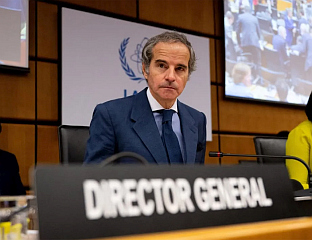
GROSSI: ZAPORIZHZHIA NUCLEAR PLANT WITHOUT EXTERNAL POWER FOR MORE THAN A WEEK
GENEVA, AUGUST 29 /SRNA/ — The Zaporizhzhia Nuclear Power Plant has been without external electricity supply for more than seven days and is currently...
14 minutes ago
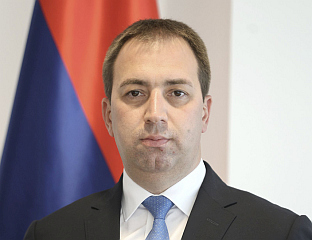
SELAK CONDEMNS RISING POLITICAL TENSIONS AND HAGUE MECHANISM'S CONDUCT
BANJA LUKA, AUGUST 29 /SRNA/ — True justice and stability are built on every people's right to remember its soldiers with dignity, while remaining com...
48 minutes ago

MIKAČA: I'M GLAD TO BE PLAYING IN THE ERA OF NOVAK ĐOKOVIĆ
BANJA LUKA, AUGUST 29 /SRNA/ — Banja Luka tennis player Sara Mikača, currently ranked No. 806 in the WTA rankings, said she was happy to have the oppo...
58 minutes ago
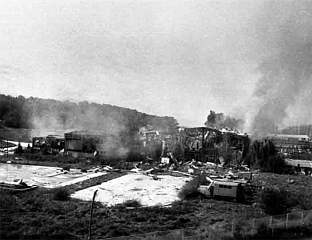
NATO KILLED CIVILIANS AND USED RADIOACTIVE MUNITIONS
BIJELJINA, AUGUST 29 /SRNA/ — NATO aircraft began a series of large-scale attacks on military and civilian targets in Republika Srpska on August 30, 1...
1 hour ago
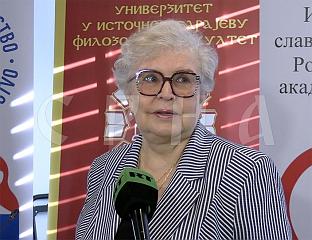
GUSKOVA: THE WORLD SHOULD HEAR ABOUT GENERAL MLADIĆ'S COURAGE, PROFESSIONALISM AND HONOR
BELGRADE, AUGUST 29 /SRNA/ — General Ratko Mladić was known as a great military commander, a top professional and an honorable officer who fought for...