


 LATEST NEWS:
English
23.08.2026
 11:49:00
TEN TIMES MORE SERBS DIE IN SARAJEVO EACH YEAR THAN ARE BORN

BELGRADE, AUGUST 23 /SRNA/ - Ten times more Serbs die each year in Sarajevo than are born there, while no Serb children are born in the formerly predominantly Serb municipalities of Ilijaš and Vogošća, demographer Miodrag Pantović said in a statement to SRNA.
"Those Serbs who are born in Sarajevo are born in just a few central municipalities, and their number is minimal. There are hardly any Serbs," Pantović warned, adding that more Serb children are now born in Mostar than in Sarajevo. SERBS WERE ONCE SARAEVO'S ELITE He said the figures show that Serbs in Sarajevo, which until 1991 was the second-largest Serb city in the region, are a population on the verge of extinction. Pantović stressed that, although the Second World War caused greater loss of life, the 1990s war had much more profound demographic consequences because people were forced to leave and their displacement proved permanent. "After the Second World War, people returned to their burned-out homes and rebuilt them, while the birth rate was higher. But not now. Thirty years have passed and people are not returning. This war caused a catastrophe," Pantović said. He believes that for Serbs in BiH, the greatest loss of the war was precisely the loss of Sarajevo and its Serb population, which he described as irreparable. "Serbs were the elite of that city. Most of the highly educated people in Sarajevo in 1991 were Serbs. Although they were not the majority in Sarajevo, they made up the majority of people with university degrees. This dealt a major blow to our people, and we have still not recovered from it," Pantović said. NO CHILDREN BORN IN BOSANSKO GRAHOVO IN 2024 Pantović said that, apart from Sarajevo, the demographic situation for Serbs is worst in Drvar, Bosansko Grahovo, Bosanski Petrovac and Glamoč, which became part of the Federation of BiH after the Dayton Peace Accords. "That area between Bihać, or between Banja Luka and Zadar, is the part of Europe that is depopulating the fastest," Pantović said. As an illustration of the severity of the situation, he noted that no children were born in Bosansko Grahovo in 2024, describing it as the first municipality in the former Yugoslavia where no one was born in a given year. Pantović said the problem in these four municipalities is that they had already been areas of emigration before the war and had relatively old populations. "A large number of people emigrated, particularly to Vojvodina, during the post-Second World War colonization. The war dealt the heaviest blow in 1995, when all these municipalities fell and return became difficult. It took several years for people to start returning, and those who came back were elderly. Young people had established themselves elsewhere, and that is the problem in these municipalities," Pantović explained. According to him, Drvar is holding on relatively well, but the situation there is also difficult. "According to official data, 20 children were born in Drvar last year. Only around ten Serb children are born each year in Bosanski Petrovac, while in Glamoč no Serb family had a new child last year," Pantović stated. SERBS WERE BiH'S LARGEST POPULATION UNTIL 1971 Pantović said that from the 18th century until 1971, despite the horrific losses suffered during the Second World War, Serbs were the largest ethnic group in BiH, while large-scale emigration contributed to their subsequent demographic decline. "We have data showing that in 1991, 30 percent of Serbs from BiH lived outside the country. There were 300,000 of them in Serbia alone," Pantović stated. He stressed that BiH, including both entities, is now among the countries in the world with the largest number of people living abroad who were born there. "When it comes to Serbs, it is possible that even half of those born in what is now BiH are now living outside the country," Pantović said.
English
3 hours ago

EU AGRICULTURE UNDER STRAIN
BRUSSELS, AUGUST 23 /SRNA/ - Farmers across the European Union have warned of sharp declines in crop yields after successive heatwaves swept across Eu...
6 hours ago
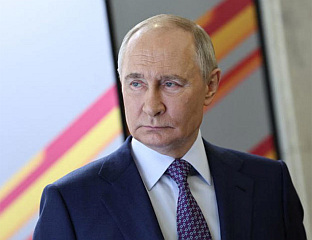
PUTIN: WE WILL NOT TOLERATE GLORIFICATION OF NAZISM IN UKRAINE
PETROPAVLOVSK-KAMCHATSKY, August 23 /SRNA/ - Russian President Vladimir Putin said that the glorification of Nazism in Ukraine is part of the problem...
7 hours ago
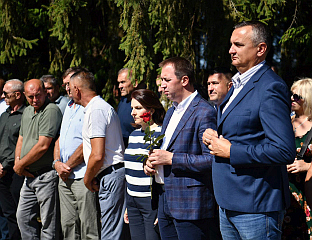
SELAK: WE WILL CONTINUE TO OPPOSE GLORIFICATION OF USTASHA IDEOLOGY
BANJA LUKA, AUGUST 23 /SRNA/ - Republika Srpska Justice Minister Goran Selak attended a memorial service in Trnopolje for innocent Serb victims of an...
8 hours ago

SRPSKA BANKING AGENCY RECEIVED NO PROPOSAL TO RAISE CONSUMER LOAN LIMIT
BANJA LUKA, AUGUST 23 /SRNA/ - The Republika Srpska Banking Agency has not received any letter, proposal or initiative concerning an increase in the c...
8 hours ago
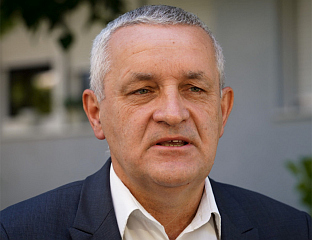
LINTA: ATTACKS ON SERBS SHOW HATRED AND VIOLENCE ARE REWARDED IN CROATIA
BELGRADE, AUGUST 23 /SRNA/ - The latest cowardly attacks by Ustasha hordes on Serbs in Dubrovnik and Pag are among countless confirmations that Croati...
9 hours ago

PEZESHKIAN: MEMORANDUM BEST PATH TO ENDING WAR
TEHRAN, AUGUST 23 /SRNA/ - Iranian President Masoud Pezeshkian stated that a memorandum of understanding with the United States is the best way to bre...