


 LATEST NEWS:
English
07.01.2026
 11:52:00
LAZIĆ: CHRISTMAS IS THE RECONCILIATION OF GOD AND MAN
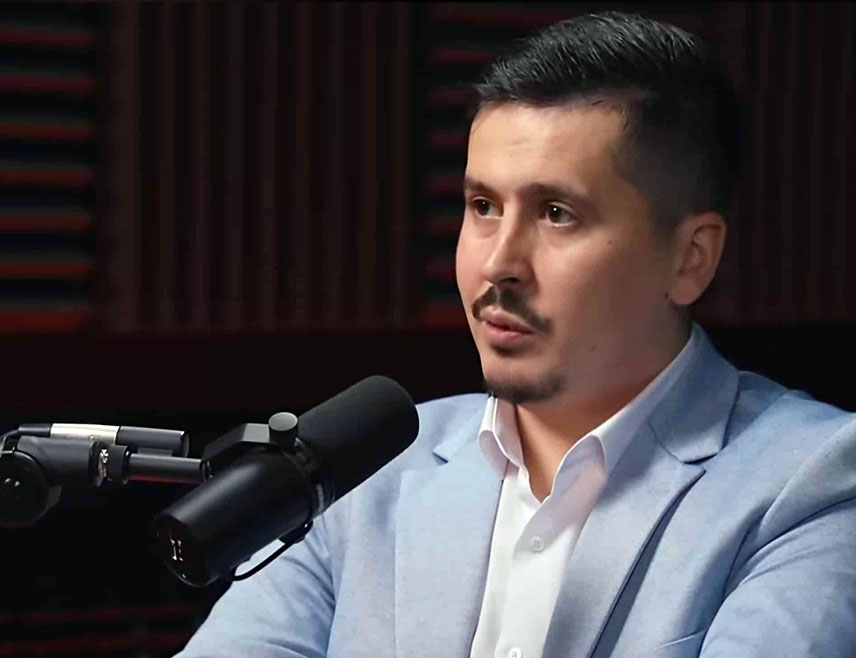
BELGRADE, JANUARY 7 /SRNA/ - Christmas is a family holiday deeply woven into Serbian tradition, but at the same time it represents a liturgical mystery and the pinnacle of human life, as well as the reconciliation of God and man, theologian Nebojša Lazić told SRNA.
Lazić said that Christmas customs are more or less similar across all Serbian regions. "Christmas shapes the family sphere through customs that begin as early as Tucindan, which has more of a customary practice than a strictly church-liturgical one," Lazić explained. He recalled that Christmas Eve, with the bringing in of the "badnjak" /oak branch/, the preparation of dried plums or figs depending on local tradition, represents preparation for Christmas, which embodies the authenticity of the Serbian people in liturgical practice. "Through the preservation of these customs, the položajnik and everything nostalgic that people remember, especially the elderly from their childhood, all of this is tied to Christmas," Lazić said. He pointed out that there are various customs, particularly regarding česnica, which among Serbs is usually a savory bread, except in Vojvodina where it is a sweet pie. According to Lazić, there is a historical reason for this: during the reign of Maria Theresa, a tax was introduced on customs and church practices, and even česnica was taxed. In order to avoid paying the tax and still preserve their customs, Serbs in those regions made it as a cake, which they continue to do to this day. "Christmas reflects our people's need for family and a family holiday, a return to once more glorious historical times when we gathered around the hearth, around one another, and gave thanks to God for all the good that would come in the year ahead. Christmas is also a liturgical mystery and the pinnacle of human life," Lazić stated. He noted that fasting represents preparation and reconciliation with oneself and with others, while Christmas marks the coming of the Son of God to Earth and the reconciliation of God and man, representing the peak of human civilization, as time itself is divided into before and after Christ's birth. Lazić emphasized that the essence of every holiday is the liturgical celebration in church. "It would not be good to cling too much to customs, because sometimes, due to those customs, we place Christ in the background, which is wrong. Customs do not exist for Christ and for people; rather, people established customs in order to celebrate God in the way they know and can," Lazić said. Asked whether Christmas customs differ between Serbs in Serbia and those in the Republic of Srpska and BiH, Lazić said that about 80 percent of them are the same. "The only minor differences are in Herzegovina, where it is customary that the Christmas table, in addition to `česnica` bread and what is prepared for Tucindan - lamb, sheep, or pig - also includes something sweet, spicy, and salty, which is believed to carry deeper symbolism related to life. The only major difference is the sweet `česnica` in Vojvodina," Lazić noted. According to him, among all Serbian customs, Christmas traditions are the most similar in all regions where Serbs live. Differences can be seen, for example, in the bringing in of the badnjak: in some places it is brought in on Christmas Eve morning, in others on Christmas Eve evening, and in some regions, such as eastern Serbia or areas around Lapovo, on Christmas morning or around the Christmas lunch. "But essentially, all these customs are more or less similar," he added. Speaking about the Sarajevo region and the custom of melting honey before sitting down to the Christmas meal, dipping česnica in honey before eating it, Lazić said that these customs originate from parts of Herzegovina. "In the Sarajevo-Romanija region, Kalinovik, Foča, and surrounding areas, elements of sweet, spicy, and salty foods have not been preserved, but only the sweet element, most often in the form of honey. In some places, customs have been fully preserved, while in others, due to population migrations, only one aspect has remained," Lazić explained. He added that in some regions, such as the Zenica-Doboj area, there is a custom of eating an apple before the Christmas meal, specifically a sour one, as sourness symbolizes health, while a rosy apple symbolizes vitality and life. "Our ancestors had this symbolism in food, which was closely connected to human life," Lazić emphasized. As for Christmas prayers, Lazić said that special prayers existed, and in Montenegro, Christmas troparia are sung. "In our region, it was customary for the head of the household to read prayers he knows, such as the Lord's Prayer," Lazić concluded.
English
23 minutes from now
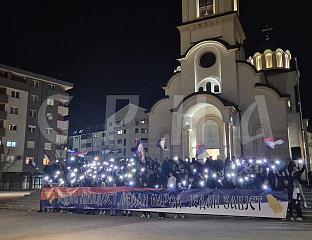
UNIVERSITY OFFERS SUPPORT TO STUDENTS AND COLLEAGUES FROM KOSOVO AND METOHIJA
PALE, MARCH 16 /SRNA/ - Students of the University of Istočno Sarajevo held a rally in support of students from Kosovo and Metohija on Monday evening...
48 minutes ago
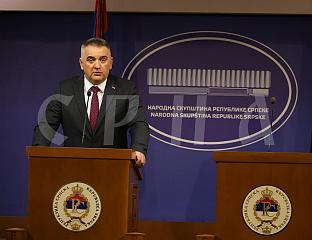
MINIĆ: NEW GOVERNMENT WITHIN THE NEXT TWO DAYS, MINISTERS TO REMAIN THE SAME
BANJA LUKA, MARCH 16 /SRNA/ - The Prime Minister of Republika Srpska, Savo Minić, who submitted his resignation today, expects a new government to be...
1 hour ago

MINIĆ: WE HAVE DEMONSTRATED STRENGTH AND RESPONSIBILITY TOWARD REPUBLIKA SRPSKA
BANJA LUKA, MARCH 16 /SRNA/ - Prime Minister Savo Minić, who submitted his resignation today, said at the special session of the National Assembly tha...
1 hour ago

MINIĆ'S RESIGNATION ACCEPTED, ELECTION OF NEW GOVERNMENT TO FOLLOW
BANJA LUKA, MARCH 16 /SRNA/ - Members of the Republika Srpska National Assembly accepted the resignation of Prime Minister Save Minić at a special ses...
3 hours ago
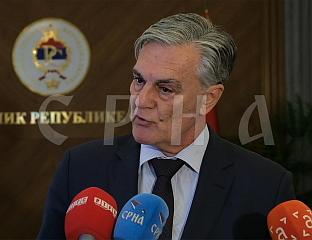
KARAN: PROTECT SRPSKA'S INTERESTS THROUGH POLITICAL UNITY
BANJA LUKA, MARCH 16 /SRNA/ - Republika Srpska President Siniša Karan said that the unity of political actors is the greatest strength of Republika Sr...
3 hours ago
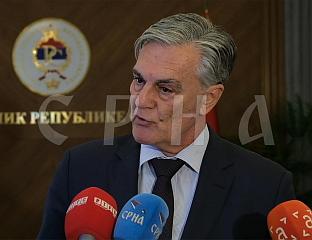
KARAN: WE ARE STRENGTHENING LEGALITY AND LEGITIMACY OF SRPSKA INSTITUTIONS
BANJA LUKA, MARCH 16 /SRNA/ – Republika Srpska President Siniša Karan stated that the legitimacy of the Government headed by Prime Minister Savo Minić...