


 LATEST NEWS:
English
17.09.2024
 10:44:00
ARCHPRIEST OSTOJIĆ: CHURCH IS CORNERSTONE OF SERBDOM, SIGNIFICANT ATTENTION FROM SRPSKA OFFICIALS
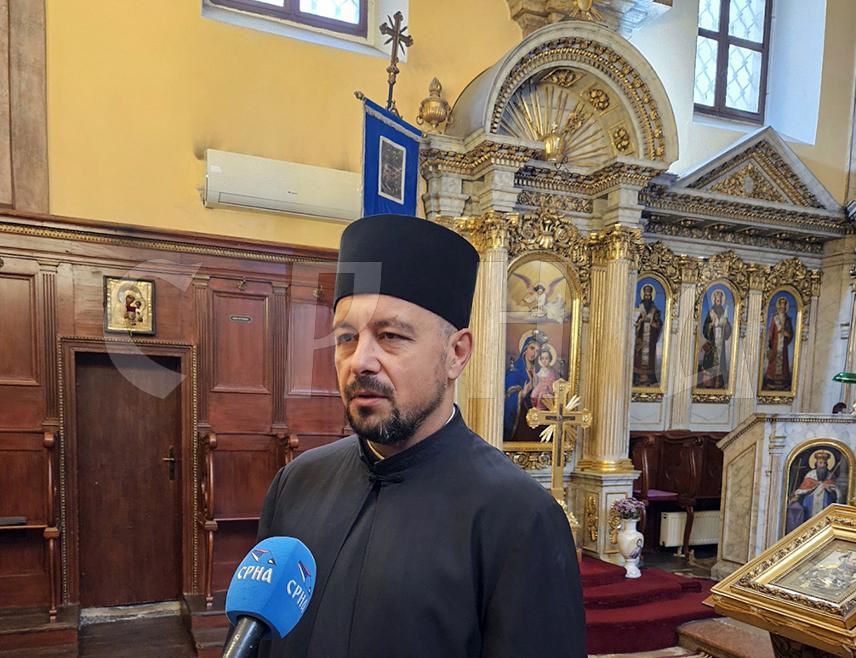
BUDAPEST, SEPTEMBER 17 /SRNA/ - The Serbian Orthodox Church /SOC/ and its churches are the foundation and cornerstone of Serbdom in Budapest, and the full churches during liturgies and the growing interest of students in Serbian schools are the result of the intensive work, cooperation, and support from Republika Srpska officials and friendly relations with the Hungarian authorities, Archpriest Zoran Ostojić, Episcopal Dean for Budim in the Church of St. George the Great Martyr, told SRNA.
"Visits by officials from Republika Srpska are essential to us and mean a great deal, as they give us encouragement and the necessary support, which we receive from Republika Srpska, primarily from President Milorad Dodik," said Father Ostojić. The Episcopal Dean for Budim emphasized that he is particularly pleased by the fact that more and more young people from Republika Srpska and the Republic of Serbia are visiting Budapest as tourists, and visiting the Church of St. George the Great Martyr has become an essential stop, especially for children from Republika Srpska. "When children from Republika Srpska come here, I can immediately recognize them by their behavior. It's clear that they are aware they are entering a sacred place, they know how to behave, and it feels like home to them," stressed Father Ostojić. The Serbian Church in Budapest holds a special place not only in a spiritual sense but also in a territorial one. The Church of St. George the Great Martyr is located in the city center, near Srpska Street, and the influence of Serbs is evident from the fact that part of the Danube's riverside is named "The Belgrade Quay". The excellent relations between Hungarians and Serbs are also a result of political ties, which have contributed to the cooperation between the Church and the authorities. Archpriest Ostojić told SRNA that Hungary is committed to strengthening Christian connections in Europe and is benevolent towards the SOC. "We have friendly relations not only with our neighbors here but also on a national level. The Hungarian government has shown a willingness to return properties that were confiscated during the communist era, and this is moving in a positive direction," explained Ostojić. THE CHURCH AS A WITNESS TO THE CENTURIES-LONG PRESENCE OF SERBS IN HUNGARY Father Ostojić says that the roots of Serbs in Budapest are best illustrated by the fact that the Church of St. George the Great Martyr in Budapest was built in the 17th century on the foundations of an older church. This stands as proof of the centuries-long presence, work, and achievements of Serbs in this area. "When the Turks were withdrawing, they destroyed the nave and narthex, but by God's will, the altar remained intact. The Serbs then built the church around the existing altar," explained Father Ostojić. As the Serbs gained economic strength and the church became too small to accommodate all the worshippers during the liturgy, the church was expanded to include a bell tower at the beginning of the 18th century, achieving its current appearance. "The architect was Andreas Mayerhofer, an artist from Salzburg, and the first iconostasis was the work of Stefan Tenecki. That iconostasis was destroyed in floods. The current iconostasis was created by Karlo Sterio, who signed it in Cyrillic. The woodcarving was done by the Janić brothers," added Father Ostojić. The Church of St. George the Great Martyr is located in the heart of Budapest, less than a hundred meters from Váci Street, the city's main pedestrian zone. Alongside Archpriest Ostojić, Protodeacon Nikola Počuča also serves in this church. The church in Pest is not the only one where Serbian Orthodox believers gathered, as before World War II there was also a cathedral church in Buda dedicated to St. Demetrius the Great Martyr. "The cathedral church was damaged during World War II, but not to the extent that it could not have been restored. Unfortunately, the communists demolished the cathedral in 1949, `in honor` of Stalin's 70th birthday," said Archpriest Ostojić. The seat of the Buda archbishops was on the site of the demolished cathedral. After that, the bishop moved to Szentendre, where he remains to this day and retains the title of Bishop of Buda. SERBS IN BUDAPEST CONTRIBUTED TO THE DEVELOPMENT OF CULTURE AND ECONOMY There are very few Serbs left in Budapest today. Displacement, wars, and the assimilation of the population have negatively impacted the Serbian community. However, the situation is changing, says Ostojić, as student homes and churches are becoming increasingly full. "Today we can say that Serbdom is returning, especially here in Pest where our church is located. Alongside the church is the endowment of our benefactor Sava Tekelija, the famous Tekelijanum. With the blessing of our Metropolitan Lukijan, we have managed to increase the interest of children from Republika Srpska and Serbia in our schools," emphasized Ostojić. Tekelijanum is an endowment founded by Sava Tekelija in 1838 in Pest to educate poor and outstanding Serbian students from all regions where Serbs lived. Archpriest Ostojić emphasized that it was the first Serbian institution of higher learning abroad, and the number of students grew until 1906 when the old building was demolished and a new one was constructed the following year. "We had two entrances: one for the boarding school and the other for residential purposes. The communists later confiscated everything, but in 1993, it was returned to us, and Tekelijanum once again became a boarding school," said Father Ostojić. Sava Tekelija intended to provide Serbian students with the opportunity for schooling and university education at this cultural and educational institution. The endowment ensured accommodation, meals, and scholarships for them. Over time, Tekelijanum became a major center of intellectual strength for the Serbian people, contributing to their cultural and civilizational advancement.
English
1 hour from now
FOČA AND RUSSIAN ONCOLOGISTS JOIN FORCES IN COMBATING MOST SERIOUS DISEASES
FOČA, MAY 13 /SRNA/ - The University Hospital Foča has signed a cooperation agreement in the field of oncology treatment with the Napalkov Oncology Ce...
1 hour from now
SAINT ANNA, MOTHER OF SAINT BASIL, CELEBRATED IN MRKONJIĆI
TREBINJE, MAY 13 /SRNA/ - His Eminence Metropolitan Joanikije of Montenegro and the Littoral, together with five bishops of the Serbian Orthodox Churc...
28 minutes from now
RAČIĆ: REGIONAL INTEGRATION REMAINS TOP PRIORITY
JAHORINA, MAY 13 /SRNA/ - The Jahorina Economic Forum, which ended today, showed that regional integration remains a top priority and that this proces...
27 minutes from now
KALUŽA: CORRECTNESS OF REPUBLIKA SRPSKA’S POLICIES CONFIRMED
BANJA LUKA, MAY 13 /SRNA/ - International relations expert Lučiano Kaluža assessed that the UN Security Council session confirmed the correctness of R...
26 minutes ago
U.S. POSITION SIGNIFICANT STEP FORWARD - LOCAL INSTITUTIONS TO MAKE DECISIONS WITHOUT INTERNATIONAL PRESSURE
BANJA LUKA, MAY 13 /SRNA/ - The position of the United States at the UN Security Council session on BiH is a significant step forward, as it could be...
27 minutes ago
VRANJEŠ: BEĆIROVIĆ'S ADDRESS TO THE UN SECURITY COUNCIL CHEAP POLITICAL PROPAGANDA
JAHORINA, MAY 13 /SRNA/ - The address by Bosniak BiH Presidency member Denis Bećirović at the UN Security Council session is cheap propaganda by a man...