


 LATEST NEWS:
English
02.02.2026
 10:53:00
PLOTAN: RELATIONS BETWEEN SRPSKA AND ISRAEL HAVE REACHED THEIR PEAK UNDER LEADERSHIP OF MILORAD DODIK
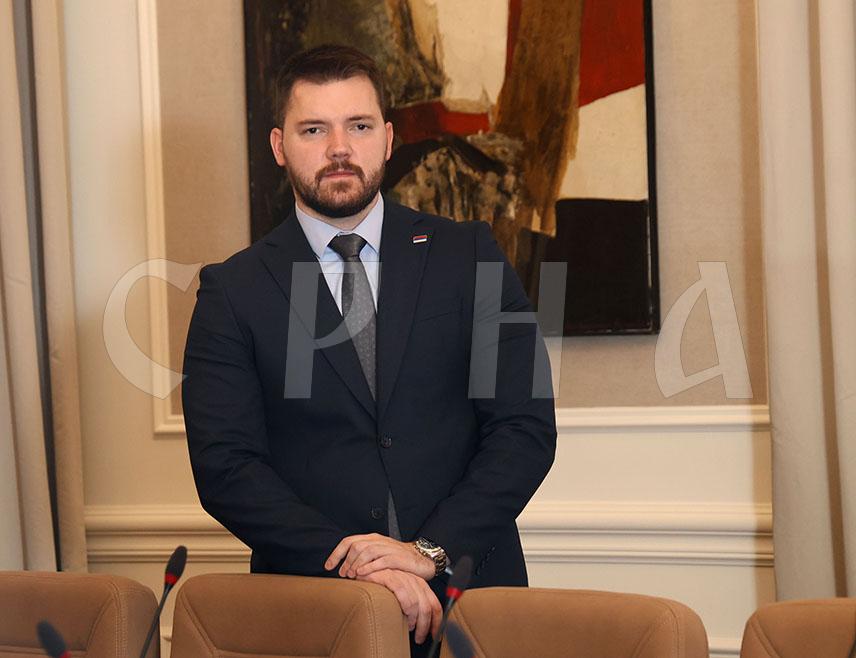
BANJA LUKA, FEBRUARY 2 /SRNA/ - Republika Srpska has recently demonstrated its ability to become an important diplomatic factor and political bridge between East and West in the modern geopolitical environment, despite geographical and demographic limitations, international and economic policy expert Nemanja Plotan stated in his column for SRNA.
SRNA publishes Plotan's column in its entirety: The delegation of Republika Srpska, led by the President of the SNSD Milorad Dodik and the Acting President of Republika Srpska, Ana Trišić-Babić, had the honor of being hosted in Israel from January 26 to 29 with the highest state honors. Although the friendship between the Serbian and Jewish peoples has historically been at an exceptionally high level, this visit nonetheless represents, in many respects, a turning point and a new chapter in the enduring and inseparable friendship between the two nations. Serbian support for the Jewish state-building project and the creation of the State of Israel preceded even the formal international recognition of that right. As early as December 1917, at the height of World War I, while Serbia itself was occupied and on the brink of biological survival, the Serbian government-in-exile sent an official letter of support for the Balfour Declaration and the creation of a Jewish state through its envoy to the United States, Captain of the Serbian Army and physician Dr. David Albala. In doing so, the Serbian people positioned themselves among the first nations to clearly and unequivocally support the Zionist idea, recognizing in the Jewish people the same historical struggle for freedom, dignity, and statehood that they themselves had waged. During World War II, Serbs and Jews shared the same fate of suffering under Nazi and Ustasha occupation, enduring persecution in concentration camps. As a result, today Jasenovac and Donja Gradina stand for both peoples not only as symbols of shared suffering, but also as historical warnings of the fate that awaits nations that abandon their state-building ideals. The continuity of these historical ties was further confirmed after the war, when Yugoslavia, on May 19, 1948—at the very earliest stage of Israel's existence - recognized the State of Israel, thus placing itself among the first countries in the world to do so. In this way, the Serbian-Jewish alliance acquired a formal political dimension, grounded in shared experiences of suffering and an unwavering struggle for freedom. That same struggle for freedom and historical justice, which the Republic of Srpska has pursued for the past 30 years, was formally acknowledged by Israel through the hosting of Republika Srpska's delegation with the highest state honors. This visit comes at a time of intense political and legal confrontation between the Republic of Srpska and the illegitimate High Representative, Christian Schmidt, who, in addition to his clear hostility toward the Republic of Srpska, is also known as an open admirer of the Nazi pilot Werner Mölders. History may not always repeat itself, but it certainly rhymes, and the Republic of Srpska and Israel have demonstrated a shared readiness to resist political revisionism of history. For most of its existence, the Republic of Srpska has operated under the framework of Western liberal hegemony, during which global politics were largely shaped by the U.S. Democratic Party—often to the detriment of the national interests of many countries, including the Republic of Srpska itself. Republika Srpska has managed to withstand many of these policies, and Israel has undoubtedly been one of its key allies in that process. Contemporary international relations theory has long recognized - particularly through scholars such as Hans Morgenthau and Margaret Hermann - that relations between states are often shaped not exclusively by abstract institutions and formal policies, but by personal relationships, trust, and the perceptions of political leaders. It is precisely within this framework that the exceptionally high level of relations between the Republic of Srpska and Israel today should be understood - relations that are largely the result of the long-term personal engagement and consistent policies of President Milorad Dodik. The highest state honors, the awarding of the Knesset's Jabotinsky Award for Freedom, symbolic gestures of deep respect in Jerusalem, as well as the openly expressed readiness of Israel's state leadership - including Prime Minister Benjamin Netanyahu - to support the Republic of Srpska, clearly indicate that this was not a merely protocol visit. Rather, it reflects a relationship built on personal trust, political consistency, and a shared understanding of the historical struggle for freedom and statehood. The sophistication of the foreign policy pursued by Republika Srpska is further reflected in the fact that, within the span of just a few days, its delegation in Israel met not only with the highest Israeli officials, but also with the ambassadors of the United States and the Russian Federation. In doing so, Republika Srpska demonstrated its ability - despite geographic and demographic limitations - to act as a significant diplomatic actor and a political bridge between East and West in today's complex geopolitical environment. It is precisely from this strategic and value-based framework that the readiness has emerged to further institutionalize and deepen relations between the Republic of Srpska and Israel in the coming period through cooperation across all sectors. Of particular importance is Israel's clear understanding and principled support for the preservation of the political autonomy of the Republic of Srpska, as guaranteed by the original Dayton Peace Agreement. At a time of growing legal uncertainty, revisionism, and attempts at centralization outside established international guarantees, such support represents not merely a diplomatic gesture, but a reaffirmation of a shared commitment to international law, historical truth, and the right of peoples to determine their own political destiny.
English
2 hours ago
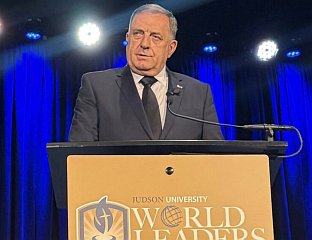
VARGAS: DODIK'S REMARKS RESONATE STRONGLY WITH AUDIENCE
CHICAGO, MAY 1 /SRNA/ – The Chairman of the Board of the World Leaders Forum at Judson University, Mark Vargas, said that the address by SNSD leader M...
5 hours ago
APPEAL TO HAGUE MECHANISM REQUESTS TEMPORARY MEDICAL RELEASE FOR GENERAL MLADIĆ
BANJA LUKA, MAY 1 /SRNA/ – The Government of Republika Srpska has sent a humanitarian appeal to the International Residual Mechanism for Criminal Trib...
5 hours ago
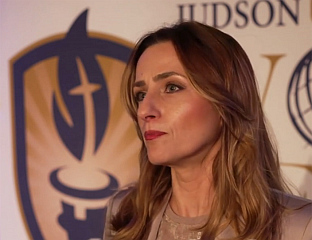
TELIĆ: AWARD TO DODIK OPENS SPACE FOR STRONGER TIES WITH USA
CHICAGO, MAY 1 /SRNA/ – BiH’s Consul General in Chicago Tatjana Telić assessed that the award presented by US-based Judson University to SNSD leader M...
6 hours ago

MITROVIĆ: DODIK’S U.S. AWARD REFLECTS SUCCESS OF HIS POLITICAL APPROACH
BELGRADE, MAY 1 /SRNA/ – The award presented by the US-based Judson University to SNSD leader Milorad Dodik is the result of his strategically sound,...
9 hours ago
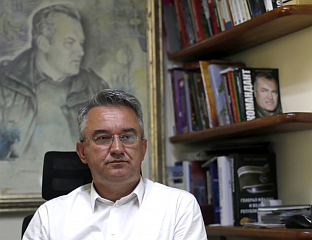
NO MECHANISM'S DECISION ON REQUEST TO RELEASE GENERAL MLADIĆ YET
BELGRADE, MAY 1 /SRNA/ – The International Residual Mechanism for Criminal Tribunals in The Hague has still not made a decision on the request by the...
9 hours ago
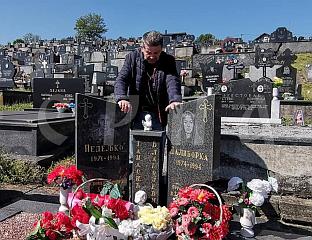
NO RULING FOR KILLING FOUR YOUNG SERBS IN SHELLING FROM FBiH FOR 32 YEARS
DOBOJ, MAY 1 /SRNA/ – Blago Blagojević today visited the grave of his 20-year-old daughter Daliborka and her fiancé, who are buried in the same grave...