


 LATEST NEWS:
English
24.03.2026
 10:21:00
PLOTAN: IRAN BECAME MAIN DISRUPTOR OF GLOBAL ECONOMY'S STABILITY
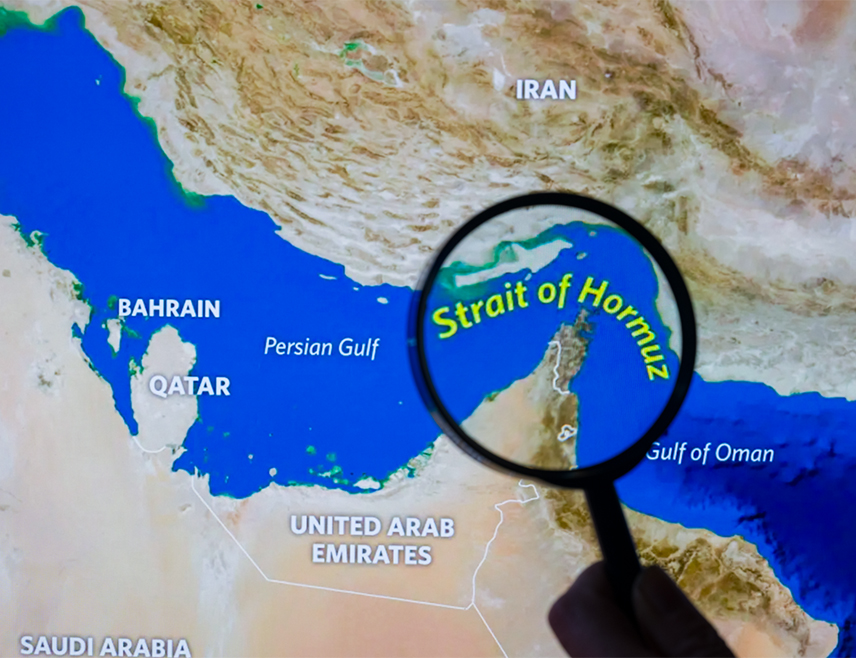
BANJA LUKA, MARCH 24 /SRNA/ - More than three weeks have passed since the Middle East once again became the main disruptor of global economic stability, claims international and economic policy expert Nemanja Plotan.
"From the moment Iran closed the Strait of Hormuz - the artery through which one-fifth of the world's oil and gas flows - this is no longer just a military conflict, but an economic mine slowly pushing the global economy toward stagflation," Plotan stated in his column that SRNA publishes in its entirety: Although inflation has become the most hated word among younger generations because it caused a surge in living costs, it does not pose a danger to the global economy as long as there is sufficient economic growth to keep up with inflationary pressure and price spikes. Stagflation, on the other hand, is the combination of rising prices and stagnant growth - an Achilles' heel for central banks, because standard monetary tools lose their effectiveness once economies are diagnosed with stagflation. If the conflict in the Middle East drags on, the global economy could find itself in the same toxic mixture that devastated the West in the 1970s. In October 1973, Arab oil-producing countries imposed an embargo on the United States and its allies that supported Israel during the Yom Kippur War, causing gasoline prices to explode. US President Richard Nixon introduced rationing, turning gas stations into battlefields with endless lines. Europe banned Sunday driving, Japan declared a state of emergency, and panic buying turned austerity measures into even greater shortages. Back then, the embargo affected only about 7 percent of global oil consumption and was targeted at just a handful of countries, so Americans could still buy oil from other sources. Today, nearly 20 percent of world supply is threatened, and the disruption comes from a war with no end in sight - even if the Strait of Hormuz reopens, oil will not return quickly or cheaply. This conflict carries the potential to trigger a lasting inflationary cycle, with rising prices of diesel, fertilizers, transportation, and food cascading forward and adding new burdens to the global economy. Economists are already seeing many tell-tale signs of stagflation. IMF Managing Director Kristalina Georgieva warns that a prolonged war brings inflation that tests global resilience, and various forecasts indicate that if the conflict drags on, inflation in the eurozone could exceed 4 percent, in the U.S. 3 percent, and in Japan 2.5 percent. At the same time, recession risks are rising: the eurozone could drop to 0.5 percent growth in the second half of the year, China below 3 percent, and global GDP could lose 0.2–0.8 percent just from the energy price surge. Yet markets are underestimating the danger, believing the war will be short and oil prices will fall back to USD 65 a barrel by year-end. But if the conflict extends another month or two, Goldman Sachs sees barrel prices reaching USD 145 - a classic scenario of the oil shocks of 1973 and 1978 that led to stagflation, recession, and a long decline in productivity. The difference this time is that the US is now energy-independent, China has diversified part of its supply through renewables and reserves, but Europe - already suffering from the Russian shock - is now taking a second blow. The Global South, drowning in debt, risks a new debt collapse if central banks start raising rates instead of cutting them. Monetary policy could easily find itself trapped again: fighting inflation kills growth, while protecting growth lets inflation run wild and erode living standards. In practice, Iran is losing the military war against the United States and Israel, so it wants to shift the conflict from the military to the economic sphere. Since it cannot win militarily, Iran aims to make the war economically unbearable for the US, its Gulf partners, and the entire world. Over the past three weeks, Iranian missiles and drones have targeted not only oil terminals but also logistics hubs, power plants, data centers, water supply, tourism, and finance - the very sectors on which Gulf states are building their diversification plans toward 2030. The longer the kinetic conflict lasts, the more permanent the economic damage becomes: insurance premiums soar, rerouting ships becomes a nightmare, contracts unravel, investors flee. Already, the credibility of the American security umbrella is being questioned, as the petrodollar system rests on the guarantee of Gulf security. If trust collapses, trillions of dollars could be redirected toward reconstruction and rearmament. Japan and South Korea - key players in the semiconductor supply chain—depend on Gulf energy for 80 percent of their needs, and a prolonged conflict could push them closer to Beijing. An open-ended war with shifting objectives gives advantages to Russia and China: high oil prices feed Russia's state coffers, while Beijing exploits the chaos to continue supplying Iran with drones and strengthen its presence in the Indo-Pacific. Iran is currently losing battles, but its economic war could reshape the entire geopolitical board—because in realpolitik, great powers do not destroy only armies, but also the economies of those who fail to prepare adequately for every crisis.
English
3 hours ago
OFAC GRANTS MOL OFFICIAL LICENSE TO CONTINUE TALKS ON PURCHASE OF RUSSIAN SHAREHOLDINGS IN NIS
BUDAPEST, JUNE 6 /SRNA/ – Hungarian oil and gas company MOL Group has received an official license from the U.S. Treasury Department’s Office of Forei...
6 hours ago
MORE THAN 1,1 MILLION PEOPLE VENERATED THE HOLY BELT OF THE MOST HOLY THEOTOKOS IN BELGRADE
BELGRADE, JUNE 6 /SRNA/ – More than 1,1 million people venerated the Holy Belt of the Most Holy Theotokos during its stay in Belgrade, according to up...
7 hours ago

LINTA: CONTINUATION OF CROATIAN SOCIETY’S FASCISTIZATION
BELGRADE, JUNE 6 /SRNA/ – Broadcasting footage of last year's concert by Marko Perković Thompson at Zagreb's Hippodrome on Croatian Radiotelevision /H...
7 hours ago
DODIK MAY RUN FOR ANY OFFICE EXCEPT REPUBLIKA SRPSKA PRESIDENT
BANJA LUKA, JUNE 6 /SRNA/ – Based on the wording of the Court of BiH’s ruling, Milorad Dodik may be a candidate for any public office except the offic...
7 hours ago
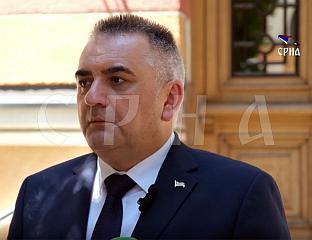
ONE OF MOST HUMANITARIAN OPERATIONS BEGAN ON THIS DAY; ITS HEROES’ IMAGES DO NOT FADE
BANJA LUKA, JUNE 6 /SRNA/ – Republika Srpska Prime Minister Savo Minić said that one of the most humanitarian and significant operations of the Defens...
10 hours ago
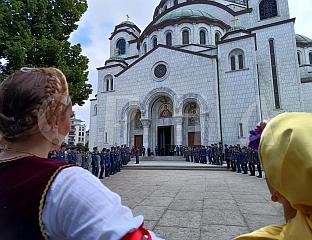
HOLY BELT OF THE MOTHER OF GOD CEREMONIALLY FAREWELLED FROM VRAČAR CATHEDRAL CHURCH
BELGRADE, JUNE 6 /SRNA/ – The Holy Belt of the Most Holy Theotokos was ceremonially farewelled today from Saint Sava Cathedral Church in Vračar and se...