


 LATEST NEWS:
English
06.04.2026
 10:03:00
EU WANTS DIGITAL EURO TO ACHIEVE MONETARY SOVEREIGNTY
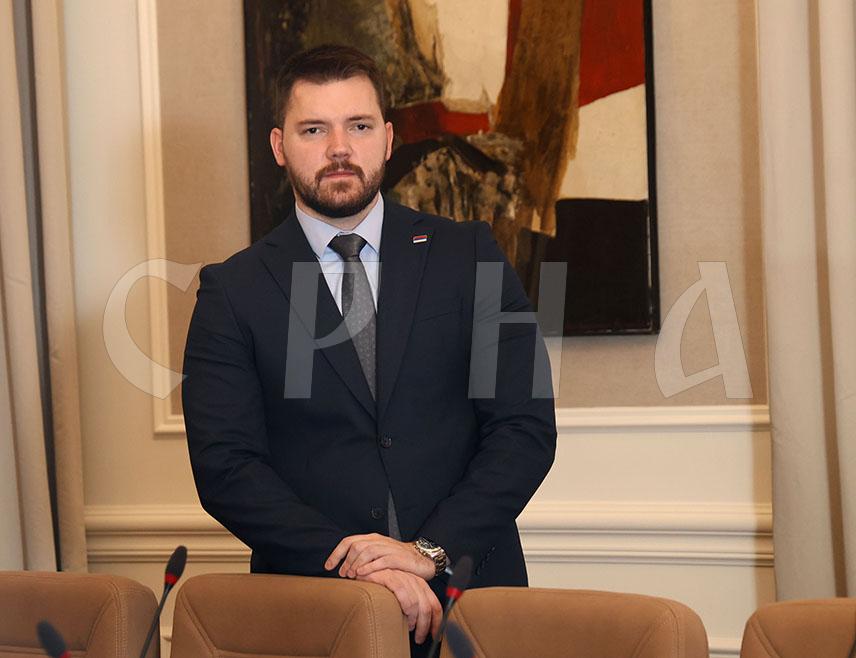
BANJA LUKA, APRIL 6 /SRNA/ - The European Union and the European Central Bank /ECB/ have for years been announcing the digital euro as a key tool for strengthening sovereignty in the digital world, said international and economic policy expert Nemanja Plotan.
"In an era of fragmentation of the global financial system, for the European Union this is not merely a technical or practical issue, but a matter of Europe's strategic autonomy in geopolitical competition with the United States, China, and the private sector, where cryptocurrencies and stablecoins are increasingly dominant," Plotan emphasized in a column for SRNA that we are publishing in its entirety: According to available data, six out of ten financial transactions in Europe pass through American systems such as Visa, Mastercard, and PayPal. In the event of even greater geopolitical tensions, this form of dependence could turn into vulnerability. In practice, the digital euro is intended to be a European response to such challenges, as it would represent public money backed by the ECB’s balance sheet, functioning as digital cash, legal tender, and an offline payment solution. On the one hand, the arguments for the digital euro sound convincing from the perspective of monetary and payment sovereignty. Bruegel emphasizes that the real reason is precisely monetary sovereignty, meaning the ECB must occupy space in the digital world so that the private sector does not fill this financial vacuum and thereby directly threaten the stability of the euro. If a complete collapse of cryptocurrencies and stablecoins were to occur, it could once again awaken the ghosts of the eurozone crisis from 2010 to 2015, when differences in credit risk between eurozone countries turned into an existential threat. In this case, the digital euro would serve as an economic anchor protecting the credibility of the euro and preventing financial fragmentation. Alongside this is Wero, a European digital wallet and mobile payment system as a private solution for everyday use. The ECB officially describes the digital euro as a simple tool: you convert money from your bank account into a digital wallet, pay offline or online, free of charge within the eurozone, with the possibility of conditional payments /e.g., payment only once goods are delivered/. As stated, the digital euro cannot be restricted in its use, while there would be limits on wallet holdings to prevent a massive outflow of deposits from banks. The goal is clear: greater competition, system resilience, and more choice for citizens, banks, and merchants. In geopolitical terms, this is a response to American dominance in payment infrastructure and China's digital yuan, which is already testing a similar model of control over payments. Europe clearly does not want others to dictate the rules in the digital era—not Washington, not Beijing, nor private actors from Silicon Valley. On the other hand, critics warn that this narrative of sovereignty may conceal another side of the coin. The libertarian think tank based in Washington, the Cato Institute, openly argues that the digital euro is not oriented toward the freedom of EU citizens, but toward strengthening central bank control in the era of cryptocurrencies. While it is presented as protection from foreign influence, Europe is simultaneously introducing restrictions on cash /planned limits of €10,000/, prepaid cards, and private crypto wallets aimed at preventing illegal financial activities. Critics further point out that, rather than increasing freedom, the digital euro could facilitate transaction tracking, which in practice would mean more efficient taxation and surveillance, similar to the Chinese model. Judith Arnal from CEPS warns that this debate mixes apples and oranges: American private companies /Visa, Apple Pay/ are not the same as geopolitical risks posed by states. A true geopolitical disruption of payments would be an extreme measure, possible only in the event of a complete breakdown of alliances such as NATO—in which case cash and debit cards would be equally at risk. From a geopolitical competition perspective, the digital euro is a classic example of how Europe is trying to secure a favorable position in a multipolar world. The United States dominates payment chains and can use this power for sanctions, as seen in the case of Russia, while China already has an operational digital yuan that gives it an advantage in Asia and digital trade. Stablecoins, which are cryptocurrencies pegged to standard currencies /usually the dollar/, threaten to erode the euro if the ECB does not respond. The digital euro is meant to ensure that public money does not disappear in the digital era and that Europe retains influence over its own financial system. However, the question remains whether this will truly strengthen Europe’s strategic autonomy or merely shift power from private hands into those of the ECB and Brussels bureaucracy. The digital euro can be a legitimate shield against external dependencies, financial crises, and geopolitical risks, but it also carries the danger of greater centralization. In a geopolitical arena where money is increasingly becoming a weapon, Europe is choosing the path of public sovereignty. Whether this will be a step toward greater resilience or toward a new form of control will depend on time and on how the project is implemented. Citizens, banks, and policymakers in the European Union must ensure that "sovereignty" does not become a synonym for less choice and more surveillance.
English
1 hour ago
CVIJANOVIĆ: ANOTHER IMPORTANT STRETCH LIES AHEAD ON THE ROAD TO JUSTICE
ISTOČNO SARAJEVO, MAY 10 /SRNA/ - "Another important stretch of the journey lies ahead of us - step by step," Željka Cvijanović, the Serb member of th...
1 hour ago
SRPSKA IS INDESTRUCTIBLE
BANJA LUKA, MAY 10 /SRNA/ - SNSD President Milorad Dodik said that Christian Schmidt had attempted to do a great deal of harm, but that in the end his...
1 hour ago
IT'S NO MYSTERY WHY SCHMIDT IS LEAVING, NATION-BUILDING MUST BE STOPPED
BANJA LUKA, MAY 10 /SRNA/ - The Acting Director of the Office for International Cooperation, Ana Trišić Babić, said that it is no mystery why Christia...
7 hours ago

LARGE NUMBER OF PARTICIPANTS AND VISITORS AT ZDRAVOFEST
GRADIŠKA, MAY 10 /SRNA/ - The 18th Festival of Tourism, Economy, Gastronomy and Cultural Heritage, Zdravofest 2026, was held in Gradiška today, bringi...
7 hours ago
KARAN TO TASS: SRPSKA IS FIGHTING AGAINST STRIPPING OF ITS POWERS
MOSCOW, MAY 10 /SRNA/ - In his first interview with a Russian media outlet, Republika Srpska President Siniša Karan told TASS that Republika Srpska is...
9 hours ago
VERDICT AGAINST SERB ŽELJKO TRAVICA IS FABRICATED AND UNJUST
BELGRADE, MAY 10 /SRNA/ - The President of the Alliance of Serbs from the Region Miodrag Linta said that the verdict of the County Court in Osijek, by...