


 LATEST NEWS:
English
06.06.2026
 09:25:00
TICKS TRANSMIT NUMEROUS DISEASES; REMOVE THEM CAREFULLY
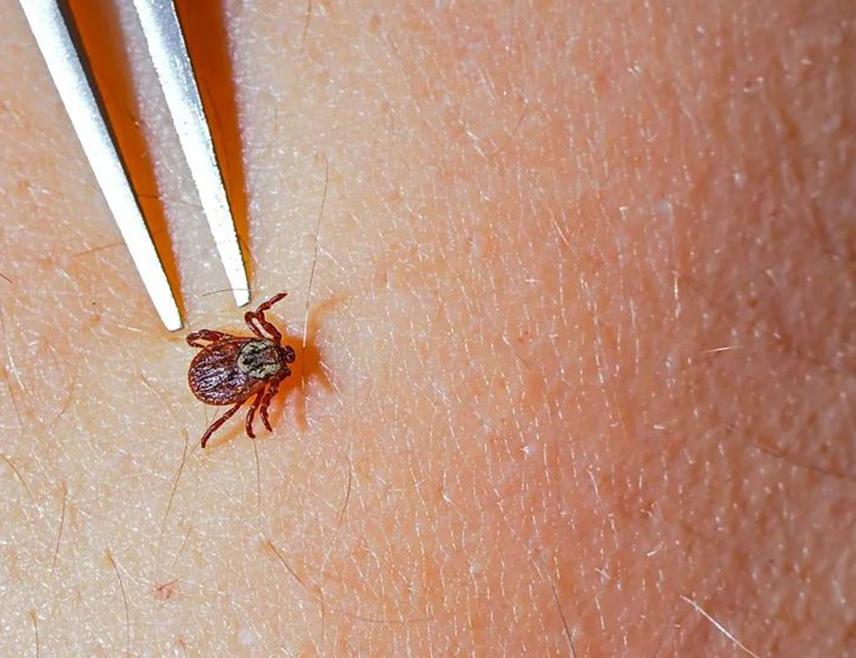
BANJA LUKA, JUNE 6 /SRNA/ – Ticks can transmit several diseases to humans, most of them zoonotic diseases that primarily affect animals, so they should be removed carefully, without pulling, twisting, or applying substances to the bite site, Nina Rodić Vukmir, Head of the Epidemiology Department at the Republika Srpska Public Health Institute, told SRNA.
Ticks are most commonly found in tall grass, shrubs, forests, parks, and unmanaged green areas. They are carriers of numerous diseases, including Lyme disease, Tick-borne encephalitis, Tularemia, Crimean-Congo hemorrhagic fever, rickettsiosis, and ehrlichiosis. Vukmir noted that vaccination can prevent tick-borne encephalitis but not Lyme disease, which is the most common tick-borne illness in this region. "If a tick bite occurs, the tick should be removed from the skin without pulling or crushing it. Before removing the tick, no substances such as alcohol, gasoline, oils, or similar products should be applied, as this causes the tick to contract and release larger amounts of secretions," Vukmir explained. She stated that ticks become infected by feeding on the blood of infected animals or through transovarial transmission from the mother tick to her offspring. "People become infected after being bitten by an infected tick, which transmits pathogens through its saliva. Infection can also occur by crushing a tick and exposing damaged skin or mucous membranes to its contents," Nina Rodić Vukmir added. According to her, a tick should be removed using tweezers by grasping it as close to the skin as possible and pulling it out gently. The bite site should then be disinfected. "The bite site should be monitored for up to one month. The appearance of redness may indicate infection with the bacterium that causes Lyme disease and requires medical treatment," Vukmir emphasized. She advised the public to avoid areas where encounters with infected ticks are possible, particularly by avoiding walking through tall grass and low vegetation. She also recommended the use of tick repellents on the body and clothing, especially on exposed skin, as well as appropriate clothing such as long sleeves and long trousers, wearing clothes close to the body, tucking trouser legs into socks, and wearing caps or hats. In addition, people should inspect their clothing and entire body, especially children, after returning from nature. She stressed that ticks can also be brought home on clothing and personal belongings such as bags.
English
4 hours ago

GENERAL MLADIĆ TO BE EXAMINED TOMORROW BY CARDIOLOGIST FROM SERBIA
BELGRADE, AUGUST 20 /SRNA/ - General Ratko Mladić is in the weakest condition he has ever been in and was unable to utter a single word during our vis...
7 hours ago

SELAK: WE ALREADY HAVE THE NECESSARY FRAMEWORK, OTHER CALLS ARE PURE POPULISM
BANJA LUKA, AUGUST 20 /SRNA/ — Republika Srpska is a leader in BiH and the region in the fight against corruption and organized crime, with a strong l...
7 hours ago

LINTA: ZADAR COURT'S RULING OVER SONG "OJ, KRAJINO, MOJA MILA MATI" ANTI-CIVILIZATIONAL
BELGRADE, AUGUST 20 /SRNA/ - Chair of the Association of Serbs from the Region Miodrag Linta described the Zadar Court’decision anti-civilizational fo...
9 hours ago

MINES FOUND - REMNANTS OF SFOR WEAPONS DISPOSAL OPERATIONS
BRČKO, AUGUST 20 /SRNA/ — Explosive ordnance and ammunition parts found in the wider area of the pheasantry in Brčko were in fact unexploded remnants...
9 hours ago

KNEŽEVIĆ PRESENTS DOCUMENTS SHOWING SPAJIĆ IS A MEMBER OF SERBIAN ARMED FORCES
PODGORICA, AUGUST 20 /SRNA/ - Democratic People’s Party President Milan Knežević presented at a press conference a document which he claims shows that...
9 hours ago

85 YEARS SINCE CLOSURE OF USTASHA GOSPIĆ-JADOVNO-PAG CAMP COMPLEX
BANJA LUKA, AUGUST 20 /SRNA/ — The Ustasha Gospić-Jadovno-Pag death camp complex, which preceded the notorious Jasenovac camp, was shut down on this d...