



 LATEST NEWS:
English
02.09.2026
 13:26:00
SARAJEVO A MAJOR THEME IN SERBIAN LITERATURE AND CULTURE
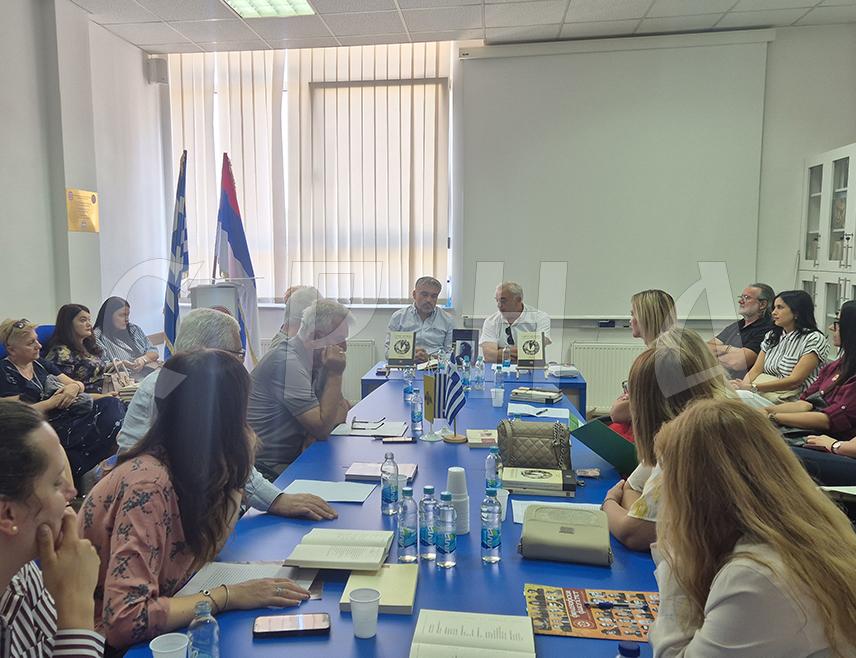
PALE, SEPTEMBER 2 /SRNA/ - Sarajevo as a theme and motif in 20th-century Serbian poetry was the focus of a roundtable discussion held today at the Faculty of Philosophy of the University of Istočno Sarajevo as part of the Days of Željko Grujić event.
Vladan Bartula, dean of the Faculty of Philosophy of the University of Istočno Sarajevo, said that the previous three roundtable discussions had focused on Grujić’s literary, cultural, and journalistic work, and that a collection of papers had been published as a result. “This year we are discussing Sarajevo in 20th-century Serbian poetry, which was also one of Željko’s major themes. The idea is to address significant topics every year that were relevant to his work, as well as topics important to Serbian literature and culture,” Bartula told reporters. He stressed that Sarajevo is a major theme in Serbian literature and culture, particularly for people living in BiH, adding that the participants discussed poets who incorporated the city into their poetic and literary works. Bartula said that the roundtable also featured the presentation of the anthology Sarajevo in 20th-Century Serbian Poetry, compiled by Academician Ranko Popović and featuring 60 poets. He added that this was the first collection devoted entirely to the theme of Sarajevo in Serbian poetry and that it includes poets from different generations and with different poetic styles, ranging from Vlado Dijak to younger authors, including Ognjen Kandić and the late Anja Jeftić. Poet Đorđo Sladoje said that he has an ambivalent relationship with Sarajevo, which at the same time attracted, repelled, and somewhat frightened him. Speaking at the roundtable, Sladoje said that the Sarajevo of his youth, in the 1970s and 1980s, was a city made for young people, where everyone could find something for themselves. “There was entertainment, sports and events of great aesthetic value. I had many beautiful moments, but also a feeling of deep loneliness and trepidation, as if intolerance could be felt in the air. Despite everything, I cannot speak of Sarajevo with hatred, because I lived an important part of my life in that city,” Sladoje stressed. According to him, the literary scene at the time is best reflected in publishing, as major publishing houses published only a few books of poetry each year. Sladoje said that before a book was published, it went through a process involving an editor and reviewers and ultimately an editorial board responsible for ensuring its ideological and political purity. When he published a book with Veselin Masleša, he could say: “Now I am somewhat of a poet.” Writer Sanja Savić Milosavljević said that she addressed the topic from her own intimate perspective, in the spirit of Željko Grujić, in an attempt to unravel a kind of identity crisis that became entangled in our souls in the 1990s. A poetry evening featuring Đorđo Sladoje will be held at 7:00 p.m. today in the amphitheatre of the Faculty of Philosophy, marking the 50th anniversary of Diary of Insomnia. Željko Grujić was born in Sarajevo in 1961. He worked as a journalist for SRNA from the beginning of the war and served as the agency’s editor-in-chief from 1994 to 1997. Grujić left journalism in early 2000 and, from 2004, continued his professional career at the National Library in Pale, where he established the Local History Department, one of the best of its kind in Republika Srpska. He was a member of the Association of Writers of Republika Srpska and the author of several acclaimed literary works. Grujić died in Pale on September 3, 2022, at the age of 61.
English
8 hours ago
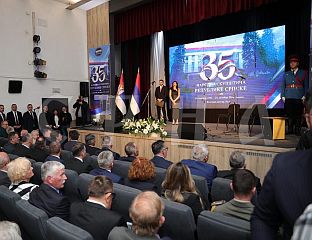
KARAN: IN 1991, THE SERB PEOPLE CHOSE THE PATH OF FREEDOM, POLITICAL SELF-DETERMINATION AND INSTITUTIONAL ORGANIZATION
PALE, OCTOBER 24 /SRNA/ - Republika Srpska President Siniša Karan said that in 1991, the Serb people chose the path of freedom, political self-determi...
8 hours ago
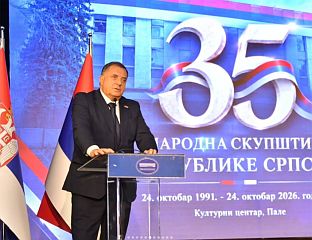
DODIK: STABILITY OF REPUBLIKA SRPSKA WILL BE PRESERVED
PALE, OCTOBER 24 /SRNA/ - President Milorad Dodik said today in Pale that Republika Srpska is a permanent category and must remain so, adding that fai...
9 hours ago
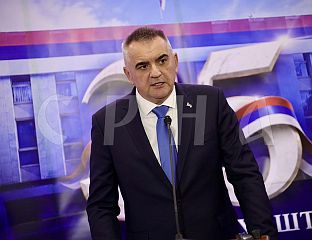
MINIĆ: NATIONAL ASSEMBLY PRESERVED SRPSKA’S SOVEREIGNTY AND ECONOMIC STRENGTH
PALE, OCTOBER 24 /SRNA/ - The National Assembly of Republika Srpska is a pillar of the preservation of Srpska as its legislative body and has made all...
9 hours ago
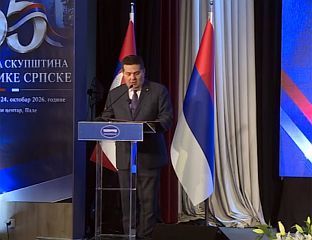
STEVANDIĆ: SRPSKA WAS ESTABLISHED AS JUSTICE FOR A PEOPLE THAT HAS ENDURED ALL GENOCIDES
PALE, OCTOBER 24 /SRNA/ - Republika Srpska was established as a form of historical justice for a people that endured all genocides under impossible hi...
10 hours ago
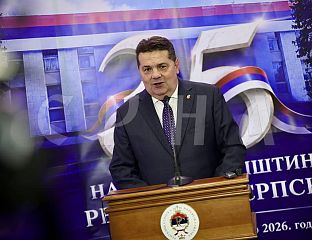
STEVANDIĆ: NATIONAL ASSEMBLY HAS DEMONSTRATED ITS INSTITUTIONAL AGENCY AND PERSEVERANCE
PALE, OCTOBER 24 /SRNA/ - Speaker of the National Assembly of Republika Srpska Nenad Stevandić said today in Pale that, over its 35 years, the Nationa...
10 hours ago
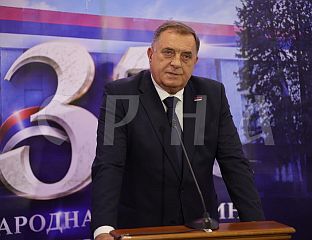
DODIK: NATIONAL ASSEMBLY HAS MADE KEY DECISIONS FOR SRPSKA
PALE, OCTOBER 24 /SRNA/ - President Milorad Dodik said today in Pale that, by passing laws and establishing institutions, the National Assembly of Rep...