



 LATEST NEWS:
English
17.09.2026
 17:47:00
DODIK: WHEN DEFENDING ONE'S OWN HOME, MEMORY OF ANCESTORS AND FUTURE OF DESCENDANTS, A SERB SOLDIER BECOMES A FORTRESS
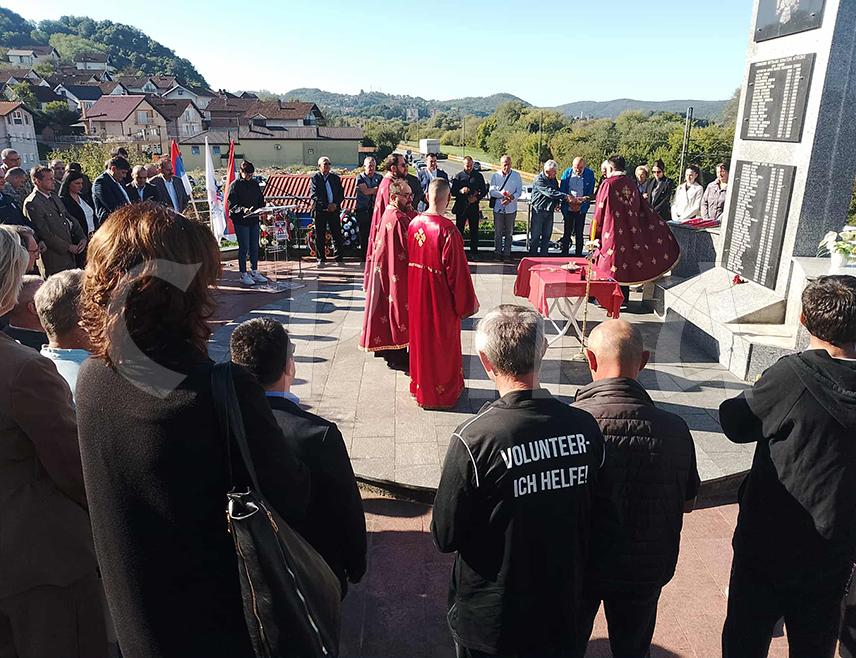
BANJA LUKA, SEPTEMBER 17 /SRNA/ - For the Serb people, a border has never been merely an administrative line on a map, but a blood-soaked line of defense for their existence and survival, the last barrier and bulwark against attacks by enemies whose sole aim was to eradicate the Serb people from these lands, President Milorad Dodik said.
Ahead of tomorrow's central ceremony in Novi Grad marking the 31st anniversary of the defense of the northwestern borders of Republika Srpska against Croatian aggression, Dodik told SRNA that on this day, our thoughts turn with particular reverence and pride, but also with sorrow over the Serb soldiers and civilians who lost their lives, to the northwestern part of Republika Srpska, where, during the most difficult days, Serb soldiers stood as an impenetrable wall. "It was a time when that part of our Republic's border was called into question, and with it the very survival of Srpska. Numerous Croatian and Muslim forces sought to break through our line of defense, advance deep into our territory, seize the Serb municipalities of Novi Grad, Kozarska Dubica, Kostajnica and Gradiška, and erase the traces of centuries of Serb presence in that area. Although they were far better equipped and numerically superior, they had not counted on the strength, pride, and courage of the Serb fighters, especially when defending their own homes, families, patron-saint days, the graves of their ancestors, and their right to their name and faith. When defending life, ancestors, and descendants at the same time, a Serb fighter becomes as strong as a fortress, and every position becomes an impregnable mountain. That is the Serb, whether in Krajina or Herzegovina, on Romanija, in Semberija, Posavina or Podrinje — one who knew, and still knows, how to defend Republika Srpska,” Dodik stressed. He told SRNA that every point in the northwestern part of Srpska, from Novi Grad, Kozarska Dubica and Gradiška to Kostajnica, has become a monument to human courage, because the survival of Republika Srpska was defended at each of these places. "Resistance to enemy forces was not motivated by a desire to conquer someone else's territory, but by the vital need to protect what was theirs, to defend Republika Srpska and their people. Our war was defensive and liberating, not one of conquest. We defended our territory, our people and the vulnerable; we defended Republika Srpska, which we created in peacetime when our former neighbors sought to deprive us of our rights and turn us into a national minority," Dodik recalled. He said that now that we live in freedom, have our own Republika Srpska and our own institutions, it is the moral imperative of all of us never to forget who made it possible for us to be where we are today and to live in freedom. "The greatest heroes are those whose dreams are woven into the foundations of Republika Srpska. Their sacrifice is a beacon showing us the path we should take and a reminder that Republika Srpska must be loved, preserved and defended every day, responsibly and proudly, because freedom is not a gift that is received once and lasts forever. It is an ongoing process. Defending the border today means safeguarding our institutions, strengthening the economy, healthcare, education and the economy, and preserving our culture, language and traditions. Defending the border means building a country in which the family is the foundation of society, mothers are respected, children and young people have access to education, and parents have jobs. It means building a country we can be proud of and in which our children see a safe haven," Dodik said. That is why, Dodik said, the institutions of Republika Srpska are making every effort to create the best possible living conditions for all our citizens and every part of Republika Srpska, so that it can become better, stronger and more advanced. "That is our goal, and it is what we work toward every day, because we owe it to the founders of Republika Srpska, who made important decisions for its future in very challenging times, to our soldiers, those who suffered, and the people who were forced to leave their homes and, after becoming refugees, remained in Republika Srpska, where they started their lives anew. Together, we have gone through very turbulent times, and we are moving forward, united around one goal — preserving Republika Srpska. We know what we are doing for the Republic and our people, and we know how to provide an answer for the future by building a powerful Republika Srpska," Dodik said. The central ceremony marking the Day of Defense against the Croatian Army's aggression on the western borders of Republika Srpska will be held tomorrow in Novi Grad, organized by the Republika Srpska Government Committee for the Preservation of the Traditions of the Defensive-Patriotic War. The Croatian Army's attack on the municipality of Novi Grad began at 9:25 a.m. on September 18, 1995. During the two-day offensive, 57 people were killed — 37 civilians, 18 soldiers, and two members of the Ministry of Interior. Seventeen civilians, three soldiers and one member of the Ministry of Interior were wounded. On September 19, 1995, members of the Army of Republika Srpska pushed the Croatian Army back across the Una River. A memorial was erected at Tunjica, the site where the largest number of civilians and soldiers were killed and where Croatian forces crossed into the territory of the Novi Grad municipality. It was consecrated in 2010. In the western Krajina municipalities of Kozarska Dubica, Novi Grad and Kostajnica, 104 people were killed in the Croatian aggression on September 18 and 19, 1995, including 54 civilians, 44 members of the Republika Srpska armed forces and six members of the Republika Srpska Ministry of Interior. Settlements and towns suffered extensive destruction and damage. According to data from municipal commissions, the estimated material damage amounted to BAM 83.3 million in Novi Grad, BAM 50.4 million in Kozarska Dubica and BAM 40 million in Kostajnica. The defense of the western Krajina municipalities against the Croatian aggression is considered an event of significance for the defense of Republika Srpska and, by a decision of the Republika Srpska Government, has been included among the most important dates in recent Serbian history.
English
16 hours ago

THACI DEFENSE DENIED REQUEST TO SUBMIT WITNESS STATEMENT AS WRITTEN EVIDENCE
THE HAGUE, OCTOBER 22 /SRNA/ – The Kosovo Specialist Chambers in The Hague have rejected a request by the defense of former Kosovo Liberation Army /KL...
17 hours ago

TRIFKOVIĆ'S BOOK ON TRAGIC FATE OF PEOPLE FROM MONTENEGRO PRESENTED
BANJA LUKA, OCTOBER 22 /SRNA/ – The book The Road of Suffering: A Chronicle of the Calvary of the People of Montenegro and Boka, 1944-1945, by Profess...
17 hours ago

FALSIFIED PARDON DOCUMENTS PUBLISHED IN CONNECTION WITH CANOPY COLLAPSE CASE
BELGRADE, OCTOBER 22 /SRNA/ – Aleksandar Vučić, head of the "United Serbia" electoral list, said falsified documents had been published claiming that...
18 hours ago

FERTILE AGRICULTURAL LAND MUST BE PROTECTED FROM SOLAR PROJECTS
BANJA LUKA, OCTOBER 22 /SRNA/ – President Milorad Dodik said it was unacceptable for fertile, arable land, one of the most important resources, to be...
18 hours ago

OPPOSITION ACCUSES GOVERNMENT OF VIOLENCE AS CLASHES ERUPT IN ALBANIAN PARLIAMENT
TIRANA, OCTOBER 22 /SRNA/ – Scuffles broke out in the Albanian parliament today, with documents and water thrown toward the speaker as the opposition...
19 hours ago

SERBS WERE THE BIGGEST VICTIMS OF GENOCIDE IN 20TH-CENTURY EUROPE
BELGRADE, OCTOBER 22 /SRNA/ – Serbs suffered the largest genocide of any European people in the 20th century, and genocide against Slavic peoples cont...