



 LATEST NEWS:
English
08.10.2026
 09:37:00
IVO ANDRIĆ - THE PERFECT WRITER
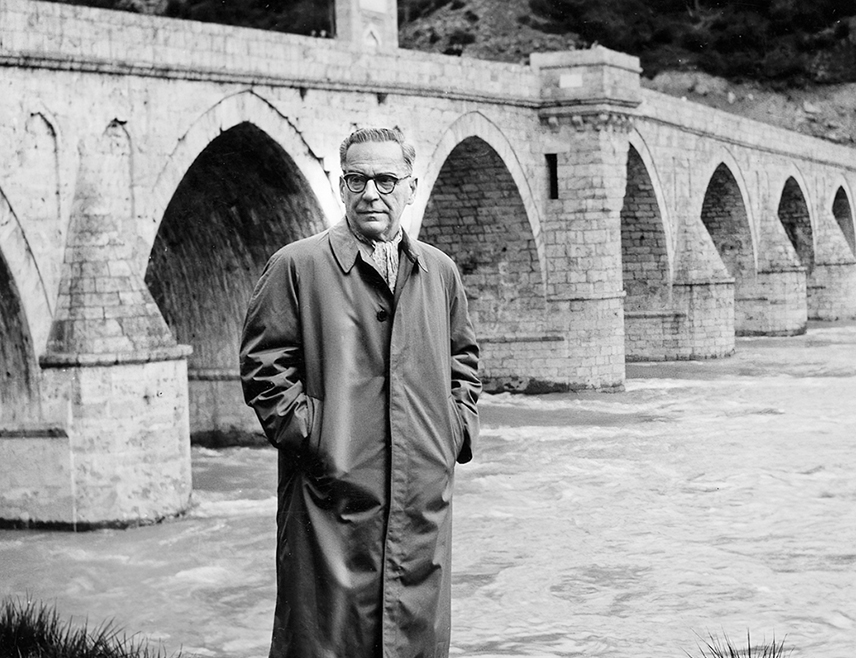
BIJELJINA, OCTOBER 8 /SRNA/ - The great Serbian writer and Nobel laureate Ivo Andrić /1892-1975/ was born on October 9, 1892.
Andrić’s life alternated between literary and diplomatic phases. In 1961, he was awarded the Nobel Prize in Literature, with the citation stating that he “epically portrays themes and depicts the destinies of people throughout the history of his country.” In his youth, Andrić was a member of the “Young Bosnia” movement and a passionate advocate of the liberation of South Slavic peoples from the Austro-Hungarian Monarchy. He earned his undergraduate and doctoral degrees in Graz, and between the two world wars he served in the consulates and diplomatic missions of the Kingdom of Yugoslavia in Rome, Bucharest, Graz, Paris, Madrid, Brussels, Geneva and Berlin. Andrić was a member of the Serbian Academy of Sciences and Arts. His best-known works include The Bridge on the Drina, The Travnik Chronicle, The Damned Yard, The Woman from Sarajevo and Jelena, the Woman Who Is Not There, in which he largely focused on life in Bosnia under Ottoman rule. During the German occupation of Serbia and Yugoslavia, Andrić refused to accept his pension and insisted that his works not be published. He refused to sign the “Appeal to the Serbian People,” which “condemned resistance to the occupier.” For moral reasons, he rejected a request from cultural workers to include his short stories in the Anthology of Contemporary Serbian Short Stories while “the people were suffering and being persecuted.” “As a Serbian storyteller, a longtime associate of the Serbian Literary Cooperative and a member of its former Literary Committee, I would, under normal circumstances, naturally respond to this invitation. Today, however, that is not possible for me, because in the present exceptional circumstances I do not wish, nor can I, take part in any publications, either with new works or with works of mine that have already been published,” Andrić explained. In the quiet of a rented room on Prizrenska Street, he wrote The Travnik Chronicle, and by the end of 1944, he had also completed the novel The Bridge on the Drina. He published both novels in Belgrade several months after the end of the war. Ivo Andrić unequivocally identified himself as a Serb and a Serbian writer. In a 1942 letter to the commissioner of the Serbian Literary Cooperative, he stated that he was a Serbian writer. In his personal documents, including his identity card, military record book, and party membership card, as well as his birth and marriage certificates, he entered “Serbian” under the category of “nationality.” Andrić twice refused to allow his poems to be included in an Anthology of Croatian Poetry, and in 1954 he also rejected the inclusion in his biography in the Yugoslav Encyclopedia of a reference to his Croatian origin. As a kind of confirmation of the Nobel laureate’s national identity, Canadian-American historian William McNeill wrote that Andrić’s maternal grandparents were Serbs, while a letter from Dubrovnik Serbian writer Ivo Vojnović to his brother Lujo states: “I am sending you the work Ex Ponto, which has caused quite a sensation. The author, a young Catholic Serb from Bosnia, an ideal young man, 26 years old.” Andrić died on March 13, 1975, and was buried in the Alley of Distinguished Citizens at Belgrade’s New Cemetery. In accordance with the writer’s wishes as expressed in his will, the Andrić Award is presented each year for a short story or collection of short stories written in the Serbian language. The Ivo Andrić Endowment is based in Belgrade, and the first and most important provision of the Nobel laureate’s will was that his estate be preserved as a whole and, as a bequest or endowment, dedicated to general cultural and humanitarian purposes. The Ivo Andrić Endowment also operates a memorial museum, which is part of the Museum of the City of Belgrade. It opened in 1976 in the apartment at No. 8 Andrićev Venac, where the writer lived with his wife, Milica Babić. At the initiative of film director Emir Kusturica, Andrićgrad, also known as Kamengrad, a cultural center located at the confluence of the Drina and Rzav rivers, was opened in Višegrad on July 5, 2012. The town is built of stone and features around 50 buildings, including a theater, cinema, city administration building, Academy of Fine Arts, river marina, hotels, squares, a church, an old inn, shops, and a memorial house dedicated to Ivo Andrić.
English
16 hours ago
VUKSANOVIĆ CALLS FOR PROBE INTO HOW PRIŠTINA GOT ADDRESSES OF DISPLACED SERBS
BELGRADE, OCTOBER 8 /SRNA/ - Slaviša Vuksanović, representative of the Association of Families of Kidnapped and Missing Persons from Kosovo and Metohi...
17 hours ago
EUR 7.92 MILLION IN FINES ISSUED DURING SUMMER TOURIST SEASON
PODGORICA, OCTOBER 8 /SRNA/ - A total of EUR 7.92 million in fines was imposed in Montenegro during the summer tourist season, Minister without Portfo...
18 hours ago

TUBERCULOSIS REMAINS PUBLIC HEALTH ISSUE IN FEDERATION
SARAJEVO, OCTOBER 8 /SRNA/ - Tuberculosis remains a public health problem in FBiH, the Federal Institute for Public Health said.
19 hours ago

MURPHY'S REMARK WAS CALL FOR PHYSICAL REMOVAL AND CONTINUATION OF POLICIES PURSUED WITH SCHMIDT
BANJA LUKA, OCTOBER 8 /SRNA/ - President Milorad Dodik said Michael Murphy had used social media to call for his physical removal and had shown how de...
20 hours ago

"WORLD SUPERMARKET" YIWU CONNECTS WORLD THROUGH ITS GOODS
YIWU, OCTOBER 8 /SRNA/ - The city of Yiwu, located on China's southeastern coast in Zhejiang Province, is also known as the "world's supermarket," whe...
20 hours ago
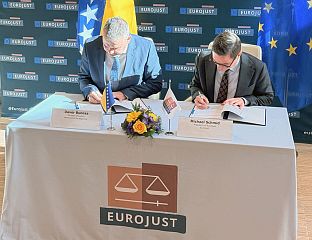
DEEPENING COOPERATION WITH EUROJUST
SARAJEVO, OCTOBER 8 /SRNA/ - Minister of Justice in the Council of Ministers Davor Bunoza and Eurojust President Michael Schmid today signed a working...