


 LATEST NEWS:
English
15.03.2026
 11:59:00
TUESDAY MARKS 22 YEARS SINCE MARCH POGROM AGAINST SERBS IN KOSOVO AND METOHIJA
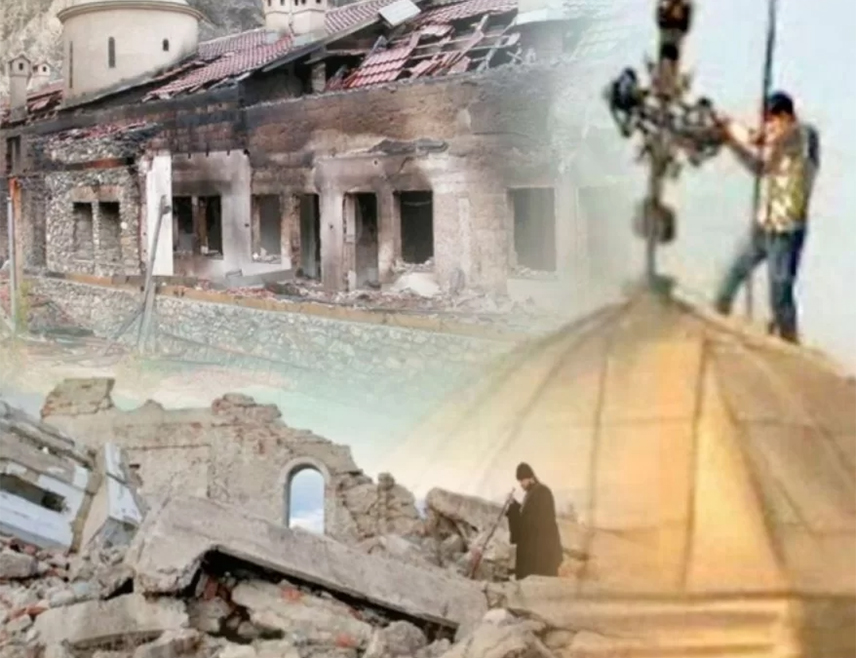
BELGRADE, MARCH 15 /SRNA/ – The March pogrom in Kosovo and Metohija, one of the most tragic events in recent Serbian history, began on March 17, 2004, when Albanians expelled 4,000 Serbs, ethnically cleansed six towns and nine villages, and destroyed or desecrated 35 Orthodox churches and monasteries, as well as more than 800 Serbian homes.
It was the second major pogrom of Albanians against Serbs after the NATO aggression, when in June 1999, in the presence of international military forces, nearly a quarter of a million Serbs and other non-Albanians were expelled from Kosovo and Metohija. The March pogrom 22 years ago was not a spontaneous incident but a planned action aimed at further ethnic cleansing of Serbs. The pretext for three days of Albanian violence was a false report by Albanian media claiming that Serbs were responsible for the drowning of three Albanian boys in the Ibar River, which, according to Albanian sources, occurred on March 16. From the early morning of March 17, Albanians launched attacks on Serbs across Kosovo and Metohija, burning and demolishing Serbian homes and centuries-old Serbian churches and monasteries. Later that evening, UNMIK denied the accusations that Serbs were responsible for the deaths of the Albanian boys, but the violence did not stop, and 19,000 KFOR troops engaged to quell the unrest failed to restrain Albanian extremists. According to a UNMIK report, 19 people were killed and nearly 1,000 injured, including around 60 members each of KFOR and UNMIK. Serbs fled to save their lives, and most of them never returned to their homes. According to UNMIK estimates, around 60,000 Albanians took part in the unrest at 33 locations. The Albanian violence ended after NATO sent reinforcements led by Admiral Gregory Johnson, commander of the alliance’s southern wing, who described the events as ethnic cleansing. The consequences of the March pogrom are still visible - the Serbian community in Kosovo and Metohija has been reduced to enclaves, and less than five percent of displaced persons have returned to their homes. Destroyed holy places, including those later placed under UNESCO protection, testify to a cultural genocide that has gone unpunished. At the time, the pogrom was condemned by both the UN Security Council and the EU, but the organizers have never been punished.
English
6 hours ago

TRUMP: MOSCOW AND KYIV ACCEPTED PROPOSED THREE-DAY CEASEFIRE
WASHINGTON, MAY 8 /SRNA/ - US President Donald Trump stated that Russia and Ukraine had accepted his proposal for a three-day ceasefire that will be i...
7 hours ago
EXPERT REPORTS ON GENERAL MLADIĆ’S HEALTH CONDITION HAVE ARRIVED
BELGRADE, MAY 8 /SRNA/ - Reports by two medical experts on the health condition of General Ratko Mladić have arrived, fulfilling the first step in the...
10 hours ago
THE HAGUE REFUSED MEETING WITH REPUBLIKA SRPSKA DELEGATION REGARDING GENERAL MLADIĆ’S HEALTH CONDITION
BANJA LUKA, MAY 8 /SRNA/ - The President of the International Residual Mechanism for Criminal Tribunals in The Hague Graciela Gatti Santana has refuse...
10 hours ago
DODIK: SRPSKA MUST NOT BE LEFT IN BiH, AS IT IS FRAMEWORK FOR SERBS' DISAPPEARANCE
MOSCOW, MAY 8 /SRNA/ - SNSD Leader Milorad Dodik says that Republika Srpska must not be left to future generations within BiH, because it represents a...
11 hours ago
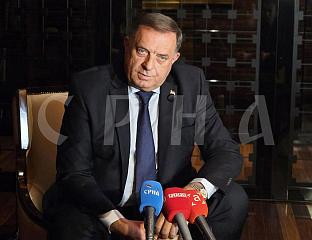
FULL NORMALIZATION OF MOSCOW - WASHINGTON RELATIONS ALSO OPPORTUNITY FOR SERBS
MOSCOW, MAY 8 /SRNA/ - SNSD Leader Milorad Dodik says in Moscow that he welcomes the rehabilitation of relations between Russia and the United States.
11 hours ago
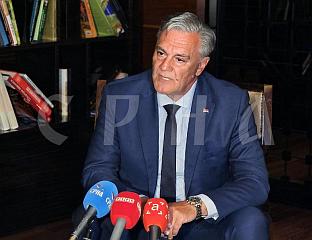
KARAN: DODIK AND PUTIN CREATED CONDITIONS FOR COOPERATION BETWEEN TWO COUNTRIES IN ALL AREAS
MOSCOW, MAY 8 /SRNA/ - Republika Srpska President Siniša Karan has stated today in Moscow that the strength of the good cooperation between the Russia...