


 LATEST NEWS:
English
20.03.2026
 11:50:00
FREEDOM HAS NO ALTERNATIVE!
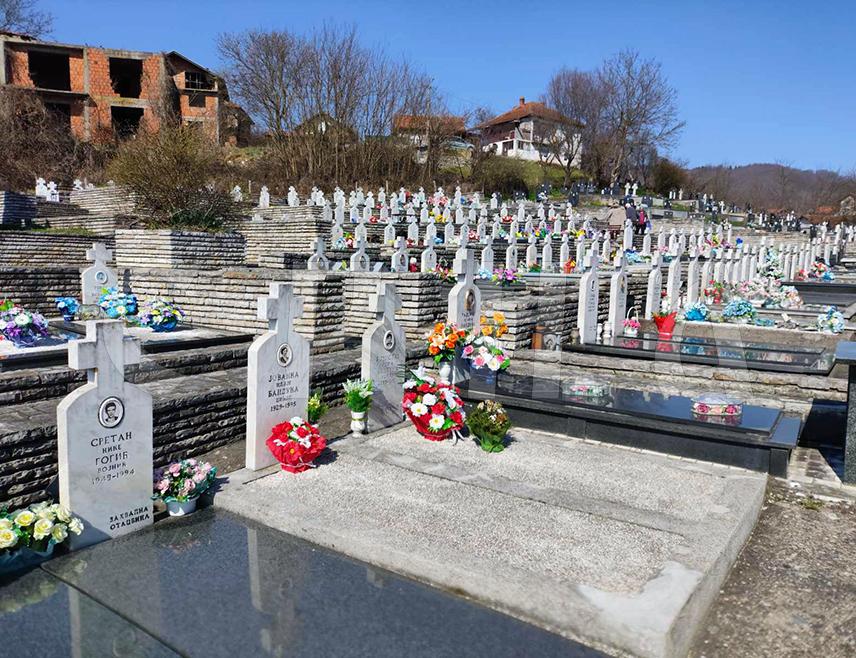
SREBRENICA, MARCH 20 /SRNA/ – Freedom is sacred for Sarajevo Serbs, which they could not have where they lived; therefore, 30 years ago they set out for Republika Srpska and have not regretted it.
By: Miro PEJIĆ These days mark 30 years since the exodus of Serbs from the southwestern municipalities of what was then Srpsko Sarajevo and parts of the city that had been under Serb control, but were handed over to the FBiH under the Dayton Peace Agreement. Questions are often raised in public as to why the Serbs left their property and departed, who made such a decision and how. For three decades, Bosniak media and politicians, with the support of representatives of the so-called international community from Western countries, have been spreading falsehoods, claiming that the then Serb political leadership persuaded and forced the Serb people to leave their preserved homes. The opposite was happening during those cold winter days and sleepless nights, from late November 1995 to the end of March 1996, when endless convoys of Serbs moved along icy roads and through blizzards into uncertainty, heading eastward over Trebević and Romanija mountains, leaving behind their ancestral homes which they had defended in a nearly four-year war. At a time when much of the world was looking toward the West, and many from Eastern countries sought to reach it at any cost, Sarajevo Serbs moved in the opposite direction, toward the East. There, they saw freedom, and, in their view, they were not mistaken. The political and military leadership of Republika Srpska was confused by the developments and tried to persuade Serbs to stay, assuring them that a solution for their security would be found. I was attending such meetings myself, but no reliable guarantees were offered. Frankly, we did not expect any. Even if they had been offered, we trusted no one at that time. MIGRATION BEGAN IMMEDIATELY AFTER FEAST OF SAINT MICHAEL AND ALL ANGELS The exodus began immediately after The Feast of Saint Michael and All Angels /November 21/ in 1995, when it was announced that a peace agreement on BiH had been reached in Dayton, and that Serb municipalities such as Ilijaš, Vogošća, Ilidža, and Hadžići, along with parts of Sarajevo under Serb control, would be part of the FBiH. This shocked and disappointed Sarajevo Serbs, who had defended themselves during the war while suffering heavy human and material losses. For us, dramatic and uncertain days followed. We did not want to stay, but where to go in those icy, snowy days, exhausted by war and without financial means? Nevertheless, people mobilized and began searching for any kind of accommodation within Republika Srpska. Trucks were sought, though difficult to find due to icy and impassable roads. Only essential belongings for survival were loaded. Most movable property was left behind. Livestock was sold at very low prices to pay for transport. Along the roads, various items and pieces of furniture fell off trucks. From wartime defenders who had bravely protected their homes, they became, overnight, people who had lost everything they had defended, as it was handed over to the FBiH, under the control of those they had fought against. WHY DID WE LEAVE? The Sarajevo Serbs had read Nobel laureate Ivo Andrić, who in his works described Bosnia as a land of hatred. They knew it without reading Andrić, though. They had experienced it firsthand. It had been shown and confirmed throughout the centuries. We listened to, remembered, and believed the stories of our elders, which they sometimes told in secret because the authorities forbade it – the stories about the suffering of Serbs during times when empires changed, about lies and deceptions that cost the Serb people hundreds of thousands of lives due to trusting their Croat and Muslim neighbours, who, according to these accounts, were always on the opposing side in the wars of the 20th century. At that time, there were still elderly people alive who remembered Doboj, Arad, deportation to Norway, and life in German captivity. The older generations remembered and told the younger ones about the camps to which Serbs were taken and from which they never returned during both World War I and World War II. They spoke of Doboj, Arad, Jasenovac, and Jadovno. They knew that such camps had existed since 1992 in Split's Lora, as well as in Visoko and Tarčin, and of more than a hundred detention sites in Sarajevo where torture continued, with hundreds of Serbs imprisoned for over three years, many of whom did not survive. Although this narrative about camps and Serb suffering had been suppressed and pushed into oblivion for decades by the communist authorities in the name of building so-called brotherhood and unity, it was secretly but persistently preserved and passed on to younger generations, who, during the most recent war, became convinced that relations had not changed and that crimes against the Serbian population were committed by descendants of perpetrators from the two world wars who had not been held accountable. This, in turn, encouraged their successors to act in the same way, believing they would remain unpunished—which, unfortunately, in most cases proved to be true. Distrust in the so-called international protection was formed during the last war in BiH, as members of international forces were seen as openly siding with the Muslims. Members of the then SFOR allegedly mocked, showed hostility, openly threatened, and encouraged Serbs to leave. Most of them were representatives of NATO member states, which had bombed the Serb population during the war, and who treated Serbs with irony, arrogance, and harshness immediately upon arrival and the establishment of their "peace" mission. HOW COULD WE STAY? Could one, after a four-year war, trust an armed enemy who, before the war, in peacetime, killed an innocent Serb wedding guest in Sarajevo's Baščaršija? Whom could one trust in such circumstances and surroundings, with knowledge of the pits into which Serbs were thrown across Herzegovina and Lika, of the massacres and persecutions of Serbs around Sarajevo in both world wars? Faced with such a situation, the Serbs neither wanted nor were willing to accept it or give up the freedom for which they had fought, sacrificed parts of their bodies, and borne tremendous burdens and losses. They gave up material possessions for the sake of freedom, abandoned their property, and set off into exile and uncertainty, exhausted materially, physically, and spiritually after learning that the territory they had defended had been handed over to the opposing side. Thousands of individual and family decisions, made overnight or within a single day, merged into one - migration. A principled decision of people of character, morality, and a clear sense of identity, the Sarajevo Serbs, was unwavering: migration and freedom. At that time, we did not have Arsenije Čarnojević to lead us, as the Serbs did at the end of the 17th century during their first great migration, which Miloš Crnjanski described in his books. Difficult and uncertain days followed, with biblical scenes unfolding on frozen roads that would break the heart of any human being. Freedom, faith, and dignity were, and remain, more important and more valuable to the Serbs of Sarajevo than houses and property. So, we set out. Spontaneously. We were searching for remaining damaged buildings across Republika Srpska where we could move at least a small part of our essential belongings and prepare at least one room for shelter. This went on for days. Trucks were loaded, and one by one, families left their apartments, houses, and ancestral homes. We managed as best we could. ENDLESS CONVOYS As early as December 1995, refugee convoys began moving from the Srpsko Sarajevo municipalities over Trebević, Poljine, Visojevica, Šići, and Nišići toward Pale and Sokolac, and further on toward the Drina. This lasted for nearly four months. The Serbs left everything behind, but they exhumed and carried with them their fallen soldiers who had given their lives for our freedom - an unique example in world history. Some were buried for the third time in cemeteries in Sokolac, Miljevići, Bratunac, Bijeljina… Referring to February 17 as the date of the exodus is meaningless. By then, at least three-quarters of the Serbs had already left their homes. The exodus unfolded spontaneously and without organisation; otherwise, it would not have been an exodus but a relocation. For every Sarajevo Serb, the date of the exodus is the day they left their home. Only in the second half of February, when it became clear that almost no one wanted to stay, did the authorities begin providing assistance and securing trucks for the transport of the smaller remaining portion of the population that lacked the means and ability to leave. LIVING ENVIRONMENT IS IRREPLACEABLE, BUT FREEDOM COMES FIRST The Serbs were aware that they could never find elsewhere the kind of living environment they had, one built over generations. Their descendants would build new ones in new places. A homeland is only one, and it was being left behind. Along with it disappeared the local culture of life, solidarity, trust, family customs and traditions, and the kind of care and closeness that cannot be recreated elsewhere without time, decades. All of these were intangible and irreplaceable values that were abandoned overnight - reluctantly, but decisively. All of it was outweighed by a single word. A word more valuable than everything else - freedom. For us Sarajevo Serbs, freedom is sacred, and we could not have it where we lived, so we set out for Republika Srpska, which represents shared freedom. We have not regretted it.
English
46 minutes from now
DODIK: EU PATH MUST BE UNDER CONDITIONS ACCEPTABLE TO SRPSKA
BANJA LUKA, MARCH 20 /SRNA/ – SNSD leader Milorad Dodik states there is a political commitment to continue the European path, but it must be under con...
31 minutes from now
DODIK: LAW ON PRESIDENT NEEDED, BUT NOT SURE IF TIME IS RIGHT
BANJA LUKA, MARCH 20 /SRNA/ - The President of SNSD Milorad Dodik stated that Republika Srpska needs a law on the President of the Republic, noting th...
31 minutes from now
DODIK: LAW ON PRESIDENT NEEDED, BUT NOT SURE IF TIME IS RIGHT
BANJA LUKA, MARCH 20 /SRNA/ - The President of SNSD Milorad Dodik stated that Republika Srpska needs a law on the President of the Republic, noting th...
14 minutes from now

KOJIĆ: BOSNIAK REPRESENTATIVES' STATEMENT WOVEN WITH HATRED AGAINST SERBS
BANJA LUKA, MARCH 20 /SRNA/ – Milorad Kojić, SNSD deputy to the House of Representatives of the BiH Parliamentary Assembly, told SRNA that Bosniak rep...
4 minutes ago
NOSOVIĆ: OUR COMPLAINT HIGHLIGHTS FARCE OF BiH JUSTICE
BANJA LUKA, MARCH 20 /SRNA/ – The head of the Association of Former Prison Camp Detainees of Republika Srpska Anđelko Nosović told SRNA that the judic...
37 minutes ago
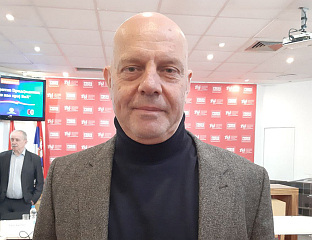
BOSNIAK STATEMENT - SIGN OF NERVOUSNESS OVER SRPSKA'S POSITION IN WASHINGTON
BELGRADE, MARCH 20 /SRNA/ – Political analyst Aleksandar Pavić told SRNA that the Bosniak statement about alleged Islamophobia represents a strong sig...