


 LATEST NEWS:
English
26.01.2026
 10:01:00
MESSAGES FROM DAVOS FOR SRPSKA
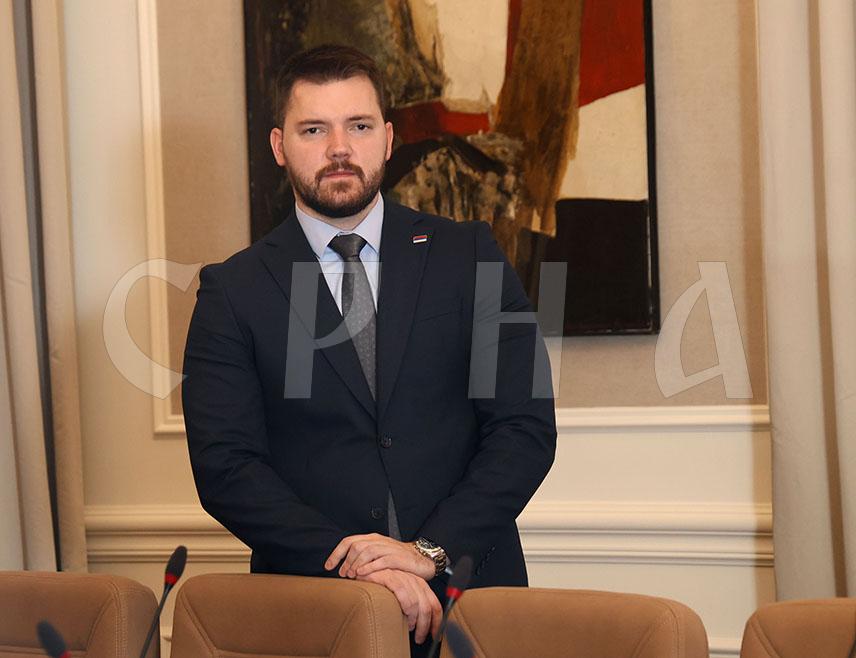
BANJA LUKA, JANUARY 26 /SRNA/ - Although the world has long since entered a period of multipolarity in economic terms, politically it is in a state of general disorientation, which undermines predictability and, therefore, economic and political stability, international and economic policy expert Nemanja Plotan assessed.
We are publishing Nemanja Plotan's column for SRNA in its entirety: The annual Davos meeting organized by the World Economic Forum once again brought together a large number of global figures, with the central theme focusing on the future of the global political and economic order. Concerned citizens around the world watched as global leaders and experts outlined the new direction in which humanity is moving. Among the many speeches delivered, two stood out in particular: the address by the President of the United States, Donald Trump, and the speech by the Prime Minister of Canada, Mark Carney. Donald Trump appeared with a distinctly triumphant and transactional narrative. His speech centered on the claim that the United States has entered a period of strong economic growth thanks to a combination of tax cuts, deregulation, energy expansion, and a tough trade policy. He presented tariffs as a legitimate tool for protecting the American economy and as a way to correct decades of unfair practices in global trade. Special emphasis was placed on the return of industry to the United States, energy independence, and technological dominance, particularly in the field of artificial intelligence. In the geopolitical segment of his speech, Trump was equally direct. He stressed that alliances, including NATO, must be based on a clear distribution of costs and benefits, and that the United States will no longer bear a disproportionate burden without adequate compensation. He framed the issue of Greenland as a purely security and strategic matter, underscoring that American power is the key guarantor of Western stability. His entire address was infused with the view that the global order does not operate on the basis of abstract rules, but rather on strength, negotiation, and interests - and that America will openly and decisively defend its own objectives within that framework. The speech delivered by Canadian Prime Minister Mark Carney was widely described as the best address of the entire summit. Carney advanced the thesis that the international order based on rules has effectively come to an end, and that the world is not entering a gradual transition but an open rupture. In his view, the era in which both great and middle powers appealed to universal rules was a partial fiction that functioned as long as strong American hegemony existed. Today, he argued, major powers are increasingly using the economy as an instrument of power, turning trade, finance, and supply chains into tools of pressure. For that reason, Carney warned that it is dangerous to "live in the illusion" of a stable order that no longer protects weaker actors. In this context, Carney called on middle powers to abandon passive adaptation and to build their own strategic autonomy, though not through isolation. He spoke of the need to strengthen domestic capacities—in energy, food, defense, industry, and finance - while simultaneously forming flexible coalitions with states that share similar interests. His concept of "values-based realism" implies accepting the reality of great-power competition while seeking, through collective action, to preserve space for sovereignty, stability, and long-term cooperation. The core message was that the old order will not return and that new rules must be built in practice, not merely proclaimed in declarations. Following Carney’s speech in Davos, the U.S. president withdrew Canada's invitation to join the newly established American "Board of Peace," a body the White House presented as a new international organization for conflict resolution. Although Trump did not provide a formal explanation for this decision, it was widely interpreted in Washington as a direct reaction to Carney's warning about a "rupture" in the US-led global order and his call for middle powers to unite against economic coercion by major actors. The "Board of Peace" itself is conceived as a structure with a strong central role for the US president, who would hold decisive authority, while membership - according to the American proposal - would be financed through high fees for permanent members. Canada had previously indicated a willingness to participate, but without accepting the financial component of the arrangement, further complicating relations. At the same time, serious reservations were expressed in Europe regarding the scope and mandate of the body, with assessments that it could undermine existing international institutions, particularly the United Nations. Although the world has long entered a period of multipolarity in economic terms, politically it finds itself in a state of broad disorientation, which undermines predictability and, consequently, both economic and political stability. For smaller actors in international relations, including Republika Srpska, this represents a particular challenge, making a careful interpretation of the messages from Davos essential. The messages from Davos can be distilled into four key conclusions of particular relevance for Republika Srpska. First, the illusion of a stable international order has come to an end. Despite their deep differences in approach, both Trump and Carney agree on one fundamental point: the world no longer operates on the basis of firm and universal rules. Carney describes this as a "rupture" in the existing order, while Trump openly embraces the logic of interests and power. For smaller political actors, this means that formal principles increasingly fail to provide protection and more often serve as instruments of selective application. Second, the economy has become the central tool of political pressure. Carney warns that trade, finance, and supply chains are being transformed into instruments of coercion, while Trump openly demonstrates this approach through tariffs, conditionality, and a transactional attitude toward alliances. In this context, economic weakness is no longer merely a developmental issue, but a direct political vulnerability. The ability to maintain fiscal stability, energy security, and an industrial base becomes a key element of political sustainability. Third, passive adaptation to the new global environment leads to subordination. Carney calls on middle powers to act in a coordinated manner to preserve space for sovereignty, while Trump's reaction toward Canada illustrates how quickly disagreement can produce tangible political consequences. In a world where decisions are made rapidly and often outside institutional frameworks, reliance on the automatic protection of international norms becomes a serious risk. Fourth, the current global instability is not a temporary disturbance, but a long-term change in the logic of international relations. Davos did not offer a vision of a return to the old order, but rather confirmed that we are entering a period of prolonged uncertainty and strategic fragmentation. For Republika Srpska, this means that future political and economic decisions must be made under conditions of reduced predictability, with the understanding that stability is no longer assumed, but must be carefully and continuously built.
English
3 minutes from now
MINIĆ: CEC SHOULD START RESPECTING LAWS
BANJA LUKA, JANUARY 26 /SRNA/ - The Prime Minister of Republika Srpska Savo Minić stated that the behavior of the Central Election Commission /CEC/ of...
13 minutes ago
CONCERN THAT POLICE FAILED TO PREVENT TUZLA INCIDENT
BANJA LUKA, JANUARY 26 /SRNA/ – Prime Minister of Republika Srpska Savo Minić said, commenting on the incident in Tuzla involving fans of Red Star and...
24 minutes ago
DODIK: THE HAGGADAH SHOULD BE RETURNED TO ISRAEL
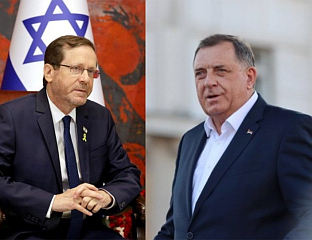
JERUSALEM, JANUARY 26 /SRNA/ - SNSD President Milorad Dodik stated that during today's meeting with Israeli President Isaac Herzog, he would propose t...
30 minutes ago
STRONGER PACE AHEAD FOR NEW GOVERNMENT
BANJA LUKA, JANUARY 26 /SRNA/ – Prime Minister of Republika Srpska Savo Minić announced a stronger pace for the new Government, which held its constit...
1 hour ago
KOŠARAC: SRPSKA DELEGATION'S VISIT TO ISRAEL PROVIDES ADDITIONAL IMPETUS FOR STRENGTHENING AND ENHANCING COOPERATION
ISTOČNO SARAJEVO, JANUARY 26 /SRNA/ - The multi-day visit of SNSD President Milorad Dodik and the Republika Srpska delegation to Israel is significant...
2 hours ago
SAINT SAVA, A LEADER OF HIS PEOPLE THROUGH CENTURIES
BELGRADE, JANUARY 26 /SRNA/ – His Holiness Serbian Patriarch Porfirije said that Saint Sava, the all-Serbian enlightener and teacher, was a leader to...